How May 18 Became a Democratic Memory of East Asia

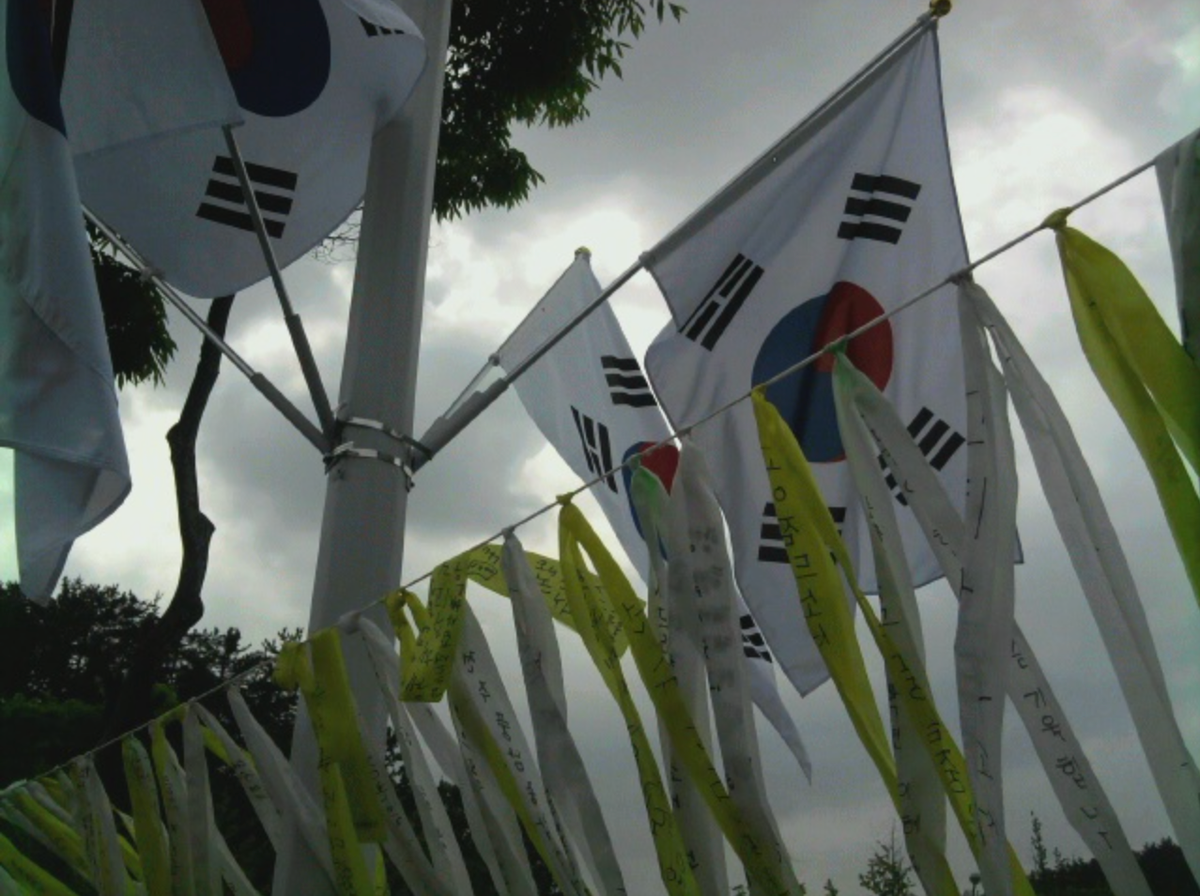
Civic Time from Gwangju to Seoul, and to the Streets of Hong Kong
May 18 is one of the most painful dates in modern Korean history.
But it is not only a date of tragedy. Gwangju in May 1980 was a city that revealed the brutality of military violence, but it was also a city in which citizens tried to protect their own community. There, people were not merely resisting a regime. Even in the face of violence, they tried not to give up human dignity or the status of citizens.
The May 18 Gwangju Democratic Uprising was a citizens’ democratic movement against the military regime that took place in Gwangju from May 18 to May 27, 1980. UNESCO inscribed records related to May 18 on the Memory of the World Register, explaining that these records document the citizens’ resistance, the suppression, and the later process of uncovering the truth and demanding compensation. UNESCO also assessed that May 18 played an important role not only in Korea’s democratization, but also in influencing other countries in East Asia.1
For a long time, Gwangju was an isolated city. At the time, state power tried to turn Gwangju into a city of rioters and disorder. The press was controlled, and the voices of citizens were distorted. But as time passed, Gwangju became one of the most important memories of Korean democracy. An event once concealed and misrepresented later became a starting point from which Korean society would ask again about power, violence, citizens, the state, and democracy.
The meaning of May 18 begins there.
Gwangju appeared to be a defeated uprising. The military suppressed the city, and many citizens were sacrificed. But history does not move only according to victory or defeat in the moment. Gwangju was suppressed, but its memory was not. The testimonies of survivors, the mourning of families, the records of student movements and civil society, songs and literature, photographs and trials, and the memorials repeated every year turned Gwangju into a moral standard of Korean democracy.
The June Democratic Struggle of 1987 became possible on top of that memory.
In the 1980s, Korea’s democratization movement made truth-finding and the restoration of honor for May 18 one of its central tasks. Gwangju came alive again in the streets of 1987. The torture and death of Park Jong-chul and the death of Lee Han-yeol once again revealed the violence of the military regime, and citizens no longer stepped back. The June Struggle of 1987 opened the door to a constitutional amendment for direct presidential elections and democratization. The questions that had been suppressed in Gwangju — can the state turn its guns on citizens, can power conceal the truth, must citizens remain silent before fear — were raised again seven years later in Seoul and on streets across the country.
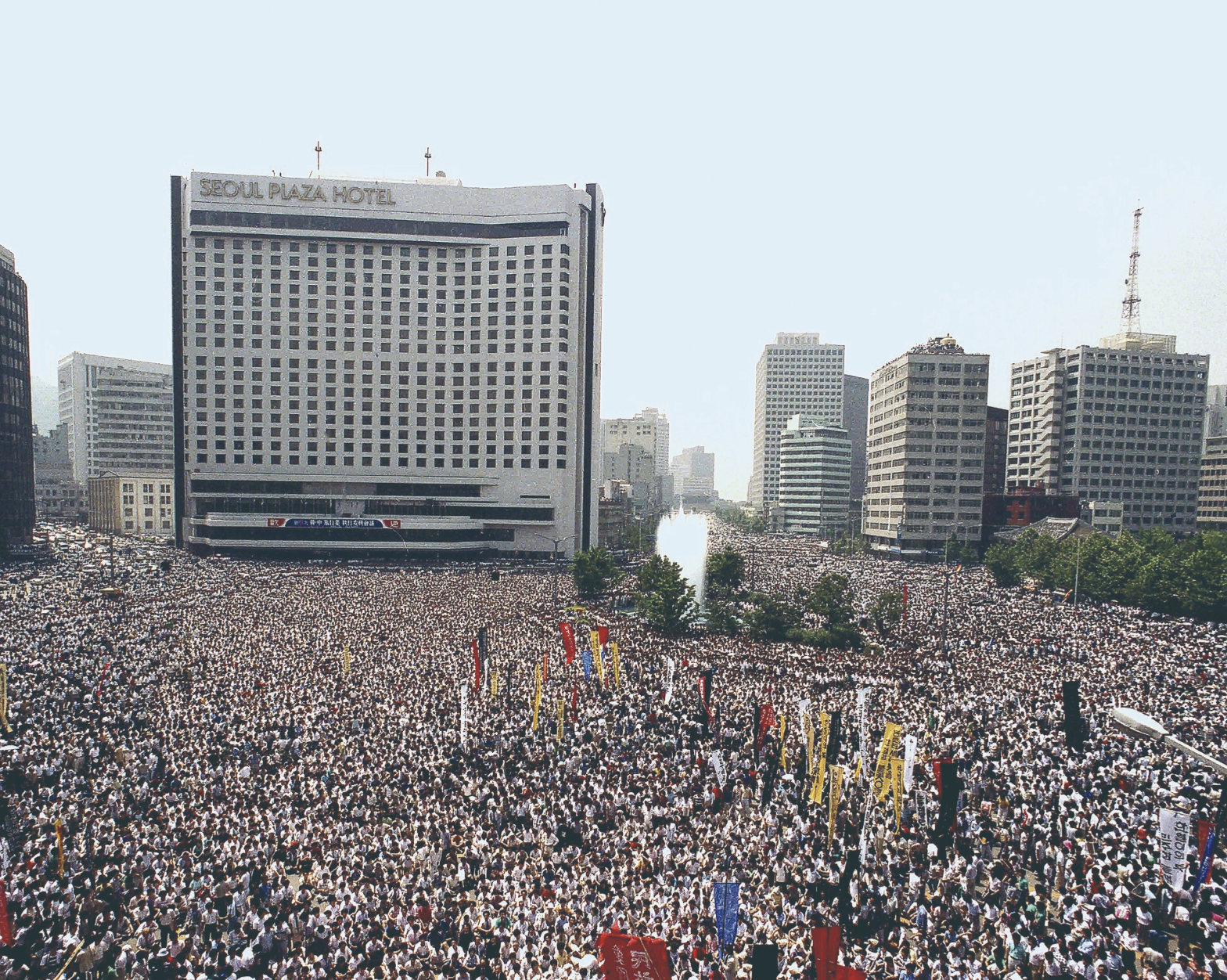
In that sense, May 18 became not merely a single event, but a memory system of Korean democracy.
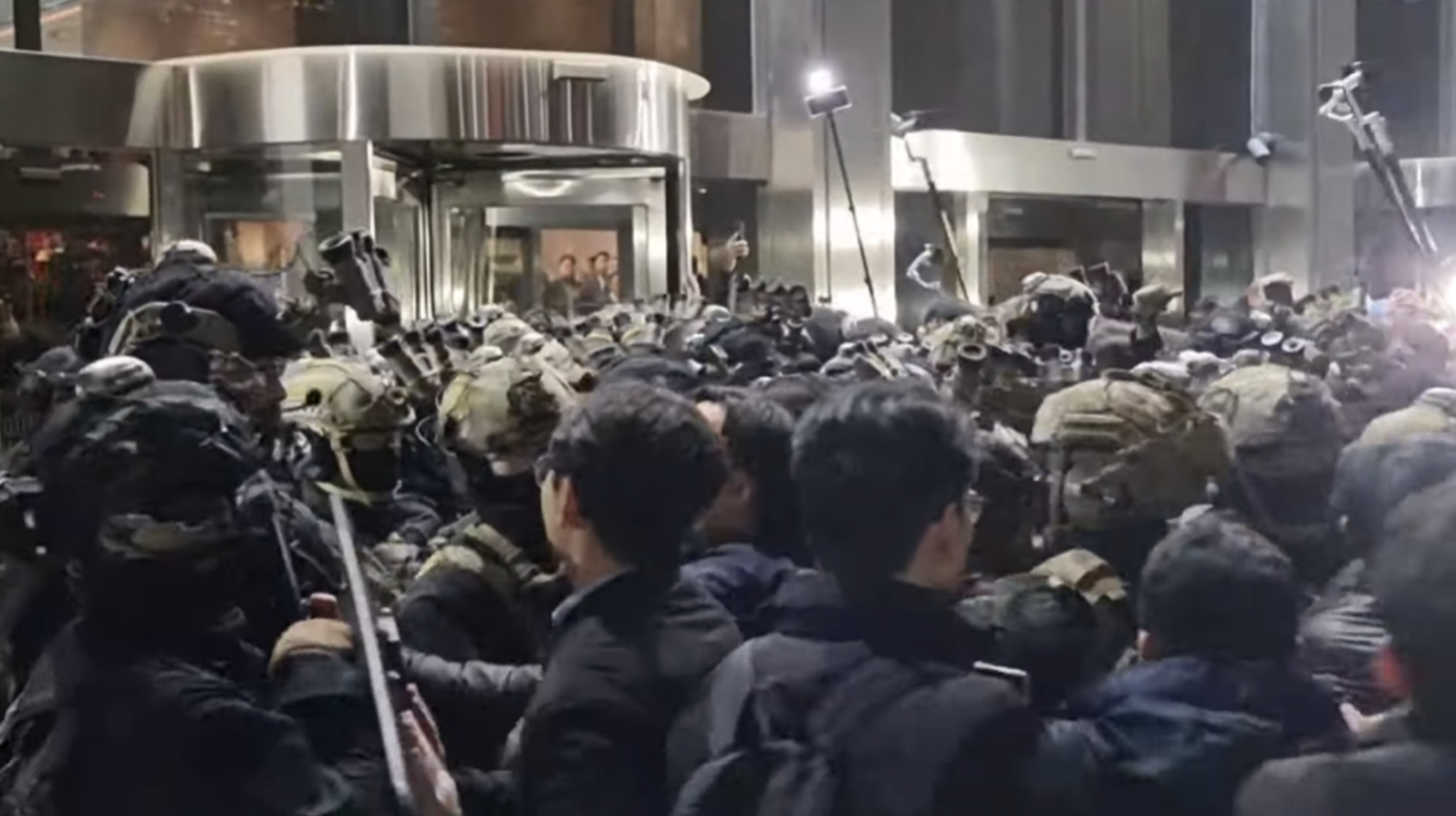
This memory came alive again on the night of December 3, 2024. President Yoon Suk Yeol’s declaration of emergency martial law immediately summoned the memory of 1980 for Korean society. Reuters reported that the martial law declaration on December 3, 2024, was the first such declaration in South Korea since 1980.2 The very word “martial law” evoked, for Koreans, the memory of Gwangju and military dictatorship.
The December 3 martial law did not last long. The immediate response from the National Assembly, civil society, the press, and countless citizens showed that Korean democracy is sustained not only by institutions, but also by memories of the past. The memory of Gwangju in 1980 meant that Korean society knew too well what the word “martial law” could lead to. Foreign media also analyzed that the December 3 martial law brought back the memory of Gwangju in 1980.3
Democracy is not protected by legal provisions alone. It is protected by the memories citizens share. The memory of Gwangju remained in Korean society like a warning device. When martial law was declared, people were not simply watching political news. They saw a historical danger signal. In this way, May 18 became a memory that went beyond a past event and helped defend democracy in the present.
But the meaning of Gwangju does not remain only within Korea.
Modern East Asian history is a history of democratization, and at the same time a history of state violence and struggles over memory. Korea’s May 18, Taiwan’s martial law and democratization, the Philippines’ People Power Revolution, China’s 1989 Tiananmen democracy movement, and Hong Kong’s 2019 democracy movement all took place in different contexts, but each reveals the tension between state power and civic dignity.
Of course, these events should not be simplified into one story. Gwangju, Tiananmen, and Hong Kong took place under different political systems, international conditions, and civil society environments. In particular, it is difficult to assert that May 18 directly influenced China’s 1989 democracy movement. But when we place East Asia’s democratization movements side by side, similar questions recur.
How does the state respond to citizens’ demands?
How do citizens protect their community in the face of violence?
How does a suppressed uprising survive as memory?
And what language does memory provide for the resistance of the next generation?
This is where the East Asian meaning of May 18 lies. Gwangju was suppressed, but afterward it became a language of democracy in Korea. In this respect, it forms an important contrast with Tiananmen in China. In Korea, Gwangju became a public memory; its records were inscribed on UNESCO’s Memory of the World Register; and it continues to be invoked through a national memorial day and rituals of remembrance. UNESCO assessed that the May 18 records contain the processes of citizens’ resistance and suppression, as well as later truth-finding and demands for compensation, and that they played an important role in Korea’s democratization.
By contrast, in China, the memory of Tiananmen in 1989 remains strictly controlled and suppressed. Even when memories are similarly rooted in state violence, in one society they may become a foundation of democracy, while in another they may become a subject of silence. This difference shows that democracy is not only a matter of institutions, but also a matter of whether memory can be publicly addressed.
In the case of Hong Kong, the connection with Gwangju is more concrete and sensory.
Hong Kong’s 2019 democracy movement began with opposition to the extradition bill. When the Hong Kong government pushed for legislation that would allow criminal suspects to be extradited to mainland China, citizens feared that it could threaten Hong Kong’s rule of law and freedoms. Amnesty International explained that the 2019 Hong Kong protests were triggered by this extradition bill and later expanded into issues of police violence and political freedoms.4
The streets of Hong Kong soon became a vast political stage. Citizens dressed in black, umbrellas and helmets, laser pointers, Telegram channels, human chains, airport sit-ins, and the fluid tactic known as “Be Water.” Hong Kong’s democracy movement revealed a new form of twenty-first-century urban civic resistance. A decentralized movement without a clear leadership, rapid mobilization through digital technology, and the production of images and language conscious of international opinion created a scene different from earlier democratization movements.
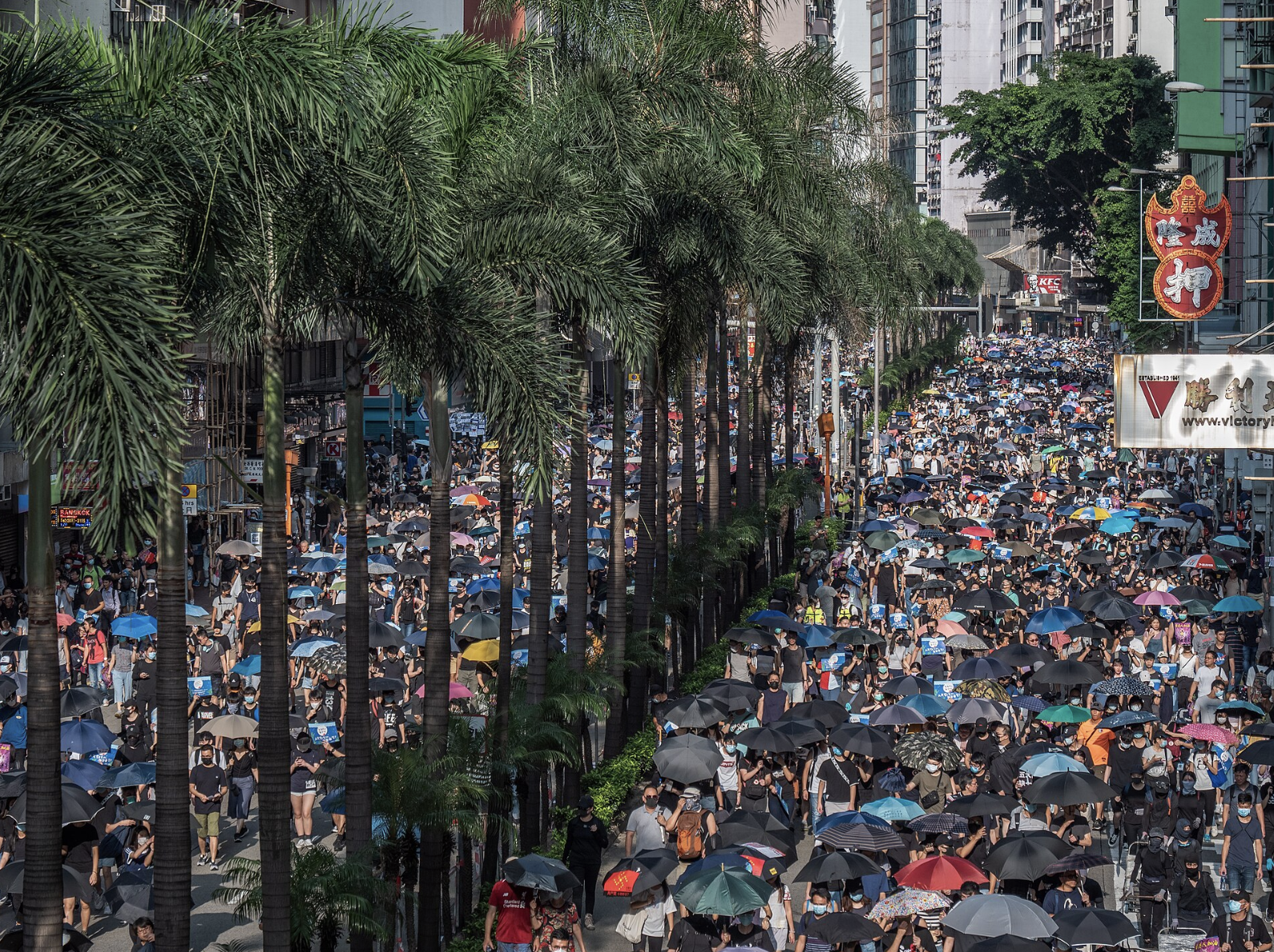
Yet at the same time, Hong Kong’s movement repeated astonishingly old questions.
How does the state treat citizens?
How do citizens protect one another before overwhelming power?
In the face of violence, arrests, and the threat of silence, what should people remember and sing?
Here, the memory of Gwangju crossed over into Hong Kong.
During the 2019 Hong Kong protests, “March for the Beloved,” the symbolic song of Korea’s democratization movement, was sung at protest sites. The Dong-A Ilbo reported that at one Hong Kong protest, a woman with a guitar sang the song in Korean and Cantonese, and that the song was introduced as one symbolizing the Gwangju Democratic Uprising.5 WIRED also explained that the song began from the memory of Gwangju, passed through Korea’s democratization movement, became an unofficial anthem of the June Struggle of 1987, and was later sung at the Hong Kong protests.6
This connection matters. Gwangju and Hong Kong are not the same event. Gwangju was a city isolated and suppressed by martial law troops under a military regime, while Hong Kong was an international city trying to protect a high degree of autonomy and freedom under Chinese sovereignty. Their historical conditions, political systems, and outcomes were different. Yet both cities shared the question: how can citizens defend their dignity before state power?
In Gwangju, citizens formed a community around the Provincial Office Square and Geumnam-ro. In Hong Kong, citizens formed loose but persistent communities across streets, subway stations, the airport, university campuses, and online channels. Citizens in Gwangju donated blood, shared rice balls, and created forms of self-governance. Citizens in Hong Kong formed first-aid teams, carried supplies, shared arrest risks, and spread protest information through digital networks. Their methods differed, but both movements resemble each other in the way citizens tried to protect one another amid violence and fear.
Another connection lies in song and memory.
Gwangju had “March for the Beloved.” Hong Kong had “Glory to Hong Kong.” “March for the Beloved” began as a song commemorating the victims of May 18 and became a symbol of Korea’s democratization movement. “Glory to Hong Kong” was created during the 2019 Hong Kong protests and became an unofficial anthem of the citizens. The French newspaper Le Monde described “Glory to Hong Kong” as a song created in the midst of the 2019 anti-government protests, and later reported that Chinese authorities had banned it.7
In democratization movements, songs are not mere background music. Songs bind scattered citizens into an emotional community. They give form to grief and anger, fear and hope that cannot be fully explained in words, allowing people to sing them together. The fact that a song that began in Gwangju moved to the streets of Seoul and then again to the streets of Hong Kong shows that the memory of democracy often crosses borders more like a song than a manifesto.
Hong Kong’s 2019 met a different outcome from Gwangju’s 1980. In Korea, Gwangju eventually became an important memory of the 1987 democratization and was established as an object of national commemoration and record. In Hong Kong, by contrast, after the implementation of the National Security Law in 2020, political space rapidly narrowed, and the symbols, songs, and language of the protests came under strong control. This difference reveals the uneven map of democracy in East Asia.
Some cities recover memory publicly even after suppression.
In other cities, memory is banned, songs are banned, and names are erased.
Because of this difference, reading Gwangju and Hong Kong together becomes even more important. Gwangju shows that democracy can be revived through memory even after defeat. Hong Kong shows that the memory of democracy can still be suppressed, and how easily the language of freedom can be criminalized. One reveals the recovery of memory; the other reveals memory’s present crisis.
And yet Hong Kong should not be read only as a failure. Hong Kong in 2019 has already left deep images in global civil society. Umbrellas, black clothing, “Be Water,” human chains, songs in the airport, posters on subway station walls, and “Glory to Hong Kong.” Even if these symbols are suppressed within Hong Kong, they remain in memory outside Hong Kong. Gwangju, too, was initially isolated and distorted, but through surviving testimonies, records, and songs, it eventually became a central memory of Korean democracy.
Memory sometimes moves very slowly.
But once memory has moved, it does not easily disappear.
May 18 is an event in modern Korean history, but it is also a window through which to think about democracy in East Asia. Korea, by remembering Gwangju, made possible the democratization of 1987 and was able to quickly contain the 2024 martial law attempt within democratic procedures. Hong Kong borrowed the songs and symbols of Korea’s democratization movement to cry out for freedom and rights in its own streets. China’s Tiananmen met a different outcome from Gwangju, but precisely because of that difference, we come to understand how important the politics of memory is.
Gwangju asks:
What will a society remember after state violence?
Where will the names of the victims remain?
Does a suppressed uprising end in defeat, or does it become the language of the next democracy?
Hong Kong also asks:
When the space of freedom narrows, how will citizens remember one another?
Where does a song that has disappeared from the streets remain?
In an age when people cannot speak, in what form does memory survive?
Gwangju in May 1980 was militarily defeated. But at the level of memory, Gwangju was not defeated. On the contrary, Gwangju became a place to which Korean democracy must return whenever it explains itself. It is one of the deepest memories Korean society reaches for whenever it faces again the language of dictatorship, violence, martial law, and the military.
Hong Kong in 2019 is also not a finished story. The street protests were suppressed, the songs were banned, and many activists had to remain silent or leave. But the memory of Hong Kong has not disappeared completely. It survives in different ways: in diaspora gatherings, international reporting, online archives, photographs and songs, and other democratic movements in other cities.
In East Asia, democracy is not a completed institution. It is a process that continues to shake, retreat, and be demanded again. Korea’s May 18, the June Struggle of 1987, the streets of Hong Kong, China’s silenced memory, and Korea’s 2024 experience of blocking martial law all show that democracy is not sustained by elections alone. Democracy is sustained through memory, mourning, records, songs, streets, and citizens’ repeated decisions.
May 18 is therefore not simply a date of the past.
It is a date that shows how democracy in East Asia bleeds, how it is remembered, and how it returns again to the streets. Gwangju was one city, but its memory has become a place that makes us think about democracy beyond Korea and across East Asia. And Hong Kong was another city that showed how that memory can still move, be translated, and be sung again.
May 18 tells us this:
Democracy is not finished once it is won.
A society that does not remember may become powerless again before the same violence.
And some defeats, when remembered for a long time, eventually become the strength of the next generation.


.png?ref=littoraleast.com)