East Asian Literature as Read by the Booker Prize

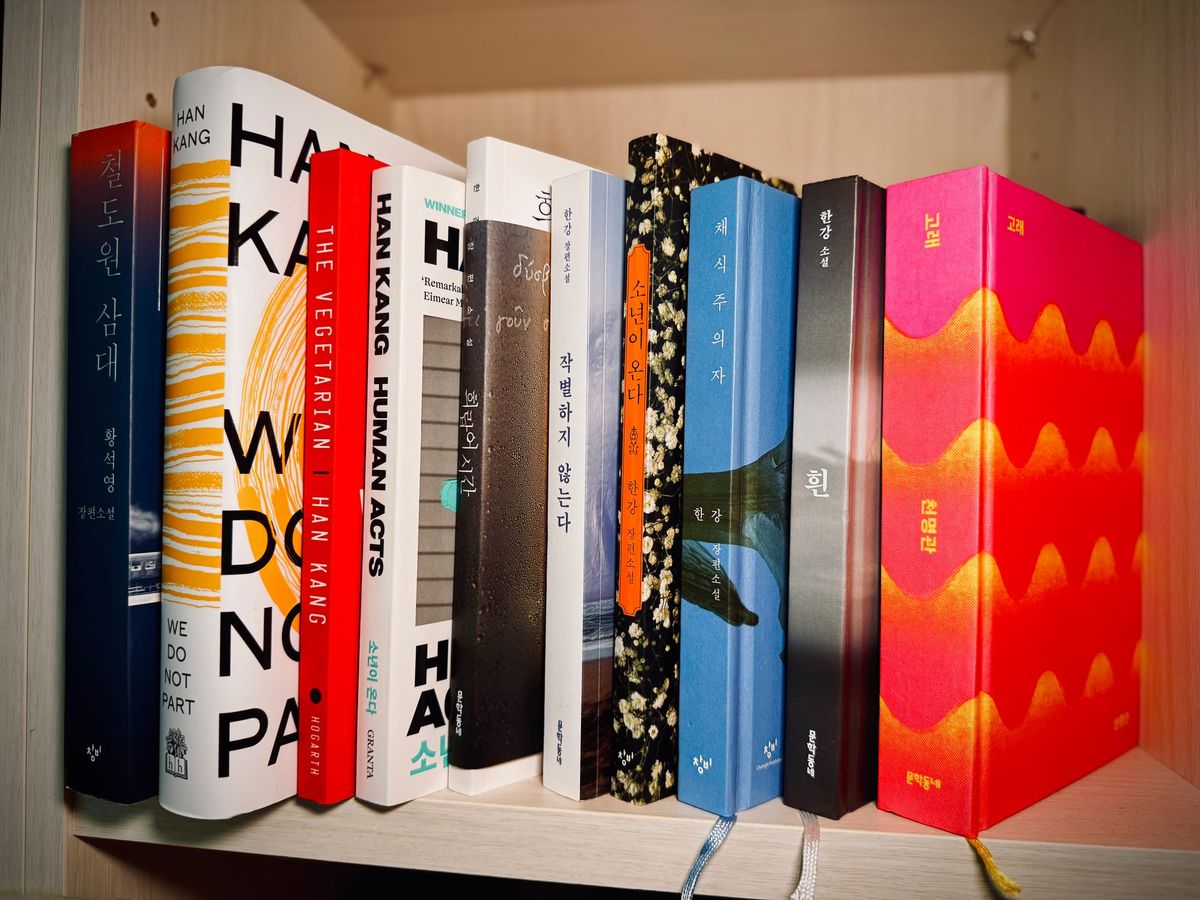
From Han Kang to Yáng Shuāng-zǐ, ten years of East Asian books on the world stage of translated literature
The International Booker Prize is one of the literary awards that best reveals how translated literature reaches readers around the world today. The prize is awarded to novels and short story collections translated into English and published in the United Kingdom or Ireland, and its prize money is shared between the author and the translator. In other words, the International Booker Prize is not simply an award for “good foreign fiction.” It is a prize that illuminates the very process by which literature moves from one language into another. The current format began in earnest in 2016, and its first winner was Han Kang’s The Vegetarian. Exactly ten years later, in 2026, Taiwanese writer Yáng Shuāng-zǐ’s Taiwan Travelogue won the same prize. This essay follows the trajectory of that decade.
If the Booker Prize represents the authority of the Anglophone novel, the International Booker Prize represents the global visibility of translated literature. To be longlisted for the prize means that a work is no longer being read only within the literature of a particular country, but has entered a broader conversation within world literature. Since 2016, works by East Asian writers have appeared steadily on the prize’s lists, and Korean, Japanese, and Sinophone literatures have come to occupy an increasingly important place in the Anglophone field of translated literature.
This essay considers not only the winners, but also the works that have appeared on the prize’s longlists and shortlists. The final winners alone cannot fully show how a literary region is being read. When we look at the lists as a whole, it becomes clearer what the International Booker Prize has discovered in East Asian literature over the past ten years: the body, memory, state violence, gender, the city, colonial experience, the wounds of modernization, and anxiety about the future. East Asian literature has not been read as a single, unified “Asian sensibility,” but as a body of literature that reveals the fractures of the modern world through its own languages and histories.
Han Kang, The Vegetarian
2016 Winner · Korean · tr. Deborah Smith
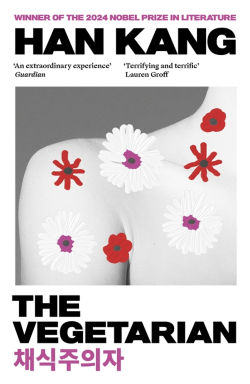
Han Kang’s The Vegetarian, the first winner of the International Booker Prize in 2016, became a decisive turning point in how Korean literature was perceived in the global market for translated fiction. The novel centers on Yeong-hye, a woman who one day abruptly refuses to eat meat, and unfolds questions of family, desire, violence, the body, and silence through three different perspectives. On the surface, the story begins with one woman’s declaration of vegetarianism. As it develops, however, the reader comes to understand that this is not simply a change in dietary habit, but an extreme and silent resistance to patriarchal family order and social violence.
The significance of The Vegetarian lies in the way it showed that Korean literature in the English-speaking world no longer had to be read only through the frames of “division” or “historical tragedy.” The novel contains a distinctly Korean family structure and a particular sense of oppression, yet it expands into universal questions of violence and freedom surrounding the body. Han Kang’s prose is restrained, but its images are intense and unsettling. After this work, Korean literature began to be read by global audiences in a far more serious and sustained way.
Yan Lianke, The Four Books
2016 Shortlist · Chinese · tr. Carlos Rojas
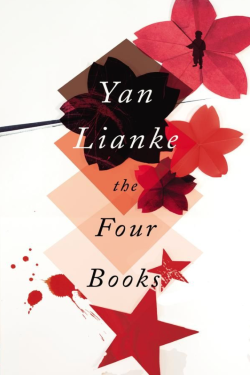
Yan Lianke’s The Four Books is a novel that treats one of the darkest memories in modern Chinese history—the Great Leap Forward and the famine that followed—in an allegorical form. Set in a world where intellectuals are confined in a forced labor camp, the novel explores political madness, survival, betrayal, faith, and writing in a distinctive style. As its title suggests, the novel speaks of history by borrowing the forms of different kinds of “books” and records.
The significance of this work lies in the way it shows how literature can create another form of memory within a history controlled by the state. Rather than relying on direct realism, Yan Lianke reveals the violence of modern Chinese history through fable and grotesque imagination. In this sense, The Four Books is not merely a novel about a specific episode in Chinese history. It becomes a work about how literature can evade and preserve truth when the state attempts to dominate memory.
Kenzaburō Ōe, Death by Water
2016 Longlist · Japanese · tr. Deborah Boliver Boehm
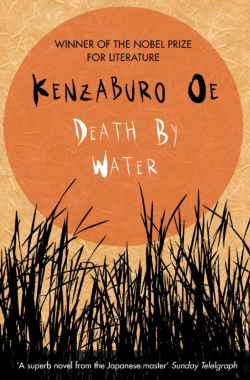
Kenzaburō Ōe’s Death by Water is a novel in which an elderly writer revisits the long-ago death of his father and the memories of his family. Through a writer figure who closely resembles his own alter ego, Ōe weaves together private memory, the history of postwar Japan, the lingering traces of the emperor system, and questions of literature and self-reflection. Rather than a plot-driven novel, this work is closer to a late-period Ōe meditation that moves slowly through the layers of memory and writing.
The fact that this work was nominated for the International Booker Prize shows that Japanese literature is not read in the world literary field only through the lens of minimalism or everyday life. Ōe’s literature stands at the heart of postwar Japanese intellectual history. Death by Water asks how personal history and national memory become entangled. For a writer to dig into his own family’s past is, in this novel, to enter the deep waters of modern Japanese history.
Yan Lianke, The Explosion Chronicles
2018 Longlist · Chinese · tr. Carlos Rojas
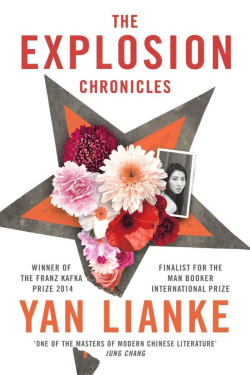
Yan Lianke’s The Explosion Chronicles depicts, in an exaggerated and grotesque manner, the process by which a small village expands into a vast city. As the word “explosion” in the title suggests, the world of this novel is filled with the energies of growth, desire, corruption, power, and capital. Through black humor and satire, it reveals how a community is transformed in the name of development, and how human ethics and relationships are damaged in the process.
This work offers a literary condensation of the madness of Chinese-style modernization and development. Economic growth and urbanization appear not simply as narratives of social success, but as enormous forces that unsettle memory and community. Many cities across East Asia share experiences of development and redevelopment, growth and loss. Among them, The Explosion Chronicles is one of the works that most grotesquely and sharply captures the speed and scale of the Chinese experience.
Han Kang, The White Book
2018 Shortlist · Korean · tr. Deborah Smith
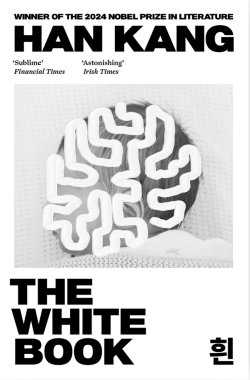
Han Kang’s The White Book is a work that blurs the boundaries between fiction, essay, and poetry. Following white things—swaddling cloth, snow, rice, salt, paper, birds, breath—the author reflects on the existence of her older sister, who died shortly after birth, and places it alongside her own life. The book moves less through a traditional plot than through images and the rhythm of mourning. White is not the color of purity, but the color of loss and survival, grief and rewriting.
The White Book shows how Han Kang’s literature expanded for global readers after The Vegetarian. What matters in this work is not the scale of events, but the depth of sensation. Han Kang connects personal loss to historical ruins, and traces in language the delicate boundary between life and death. It is a work that shows Korean literature can be read within world literature not only through intense narrative, but also through a quiet form of mourning.
Wu Ming-Yi, The Stolen Bicycle
2018 Longlist · Chinese (Taiwan) · tr. Darryl Sterk
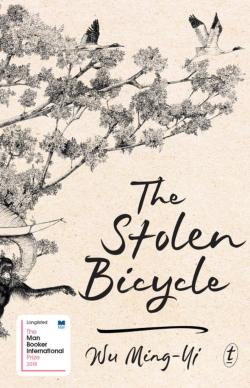
Wu Ming-Yi’s The Stolen Bicycle begins with a search for a missing father and a stolen bicycle. Yet the novel does not remain a simple family mystery. As it follows the object of the bicycle, Taiwan’s colonial experience, war, animals, technology, collecting, and the memories of family history become intricately intertwined. At the heart of the work is the way a seemingly small object can open onto the entire history of a society.
This work reveals the distinctive sense of memory found in Taiwanese literature. Taiwan’s history was shaped through the Japanese colonial period, war, Kuomintang rule, and the hybridity of identity. Rather than explaining grand history head-on, The Stolen Bicycle approaches it through objects, traces, and collected memories. The novel shows that history sometimes remains more deeply in old objects and personal quests than in national monuments.
Can Xue, Love in the New Millennium
2019 Longlist · Chinese · tr. Annelise Finegan Wasmoen
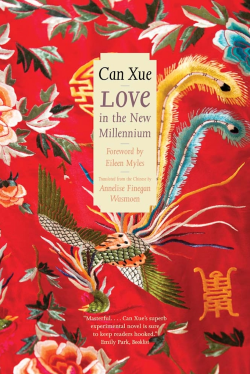
Can Xue’s Love in the New Millennium is a novel that resists easy summary. It presents a world in which love, desire, labor, surveillance, fantasy, and bodily sensation are intertwined. The characters move less through clear psychological explanation than through dreams and nightmares, strange conversations, and shifting sensations. Can Xue’s literature does not offer the reader a friendly narrative; instead, it unsettles the very sense of reality we take for granted.
The significance of this work lies in the way it shows that Chinese literature does not enter world literature only through historical realism or political allegory. Can Xue writes human desire and anxiety in a far more experimental, difficult, and surreal mode. Her work moves beyond the particular society of China and reveals, like a strange dream, the instability of the modern self and the world.
Hwang Sok-yong, At Dusk
2019 Longlist · Korean · tr. Sora Kim-Russell
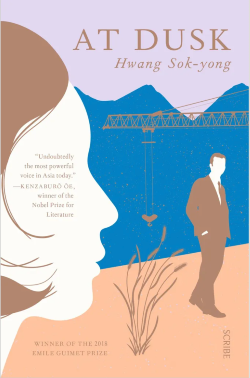
Hwang Sok-yong’s At Dusk interweaves the life of a successful middle-aged architect with the precarious lives of a younger generation, exploring questions of development, class, and memory in Korean society. Once a poor young man, the protagonist becomes successful amid the currents of industrialization and urban development, yet his present remains haunted by past losses and a sense of debt. The anxieties of the younger generation appear in the novel like shadows cast by the era he has lived through.
This work condenses the transformations of modern Korean history and the popular sensibility that Hwang Sok-yong has long explored into an urban narrative. Korea’s compressed growth and development offered some people opportunities for upward mobility, but for others they meant displacement and loss. At Dusk reveals the class fractures that remain beneath the surface of a successful city.
Yōko Ogawa, The Memory Police
2020 Shortlist · Japanese · tr. Stephen Snyder
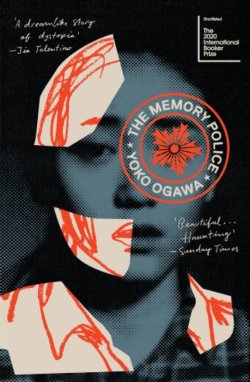
Yōko Ogawa’s The Memory Police is a dystopian novel set on an island where things disappear one by one, and people lose even their memories of them. Birds, roses, photographs, perfume, and other things vanish, and those who remember what has disappeared become targets of surveillance by the Memory Police. Written in a quiet and restrained style, the world of the novel gradually turns into an increasingly chilling space of control and forgetting.
The novel powerfully asks about the relationship between memory and power. A society that cannot remember what has disappeared cannot know what it has lost. Within the restrained atmosphere characteristic of Japanese literature, The Memory Police explores universal themes of censorship and conformity, forgetting and resistance. From the perspective of East Asian memory politics, the work is also important because the loss of memory can be not merely a personal tragedy, but a political condition.
Can Xue, I Live in the Slums
2021 Longlist · Chinese · tr. Karen Gernant & Chen Zeping
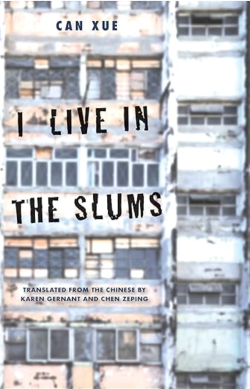
Can Xue’s I Live in the Slums is a collection of short stories that unfolds a world where reality and dreams, animality and humanity, poverty and fantasy are interwoven. The title suggests the social margins, but Can Xue’s “slums” are not simply sociological spaces. They are closer to strange places where the human unconscious, desire, anxiety, and the uncanniness of existence are revealed.
This book clearly displays the experimental quality of Can Xue’s literature. She does not allow the reader a stable interpretation. Instead, she shows how literature can create sensations that are unfamiliar and unsettling. The work demonstrates that one strand of Sinophone literature is being read by global audiences in a direction entirely different from realist historical narrative: as a surreal and philosophical literature of the inner self.
Bora Chung, Cursed Bunny
2022 Shortlist · Korean · tr. Anton Hur
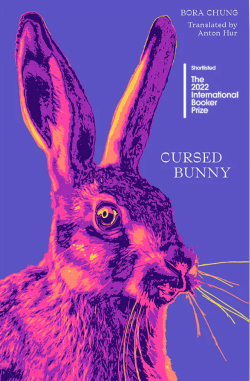
Bora Chung’s Cursed Bunny is a short story collection that blends horror, science fiction, fantasy, folktale, and black comedy. A cursed rabbit-shaped lamp, transformations of bodies and objects, the violence of family and capitalism, revenge, and grotesque desire appear in unfamiliar forms across its stories. The work shows that Korean literature does not have to be introduced to the world only through realism or historical fiction.
The significance of Cursed Bunny lies in the powerful way it proves that genre fiction and literary value are not separate from one another. Through grotesque and at times brutal imagination, Bora Chung reveals the violence of contemporary society. Questions of family, labor, capital, gender, and the body become even more visible through monsters, curses, and fantastical devices. This book greatly expanded the global spectrum of Korean literature.
Mieko Kawakami, Heaven
2022 Shortlist · Japanese · tr. Sam Bett & David Boyd
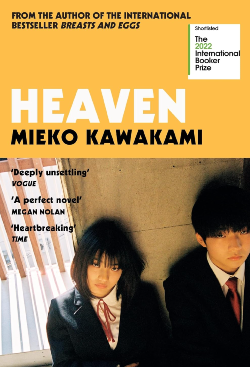
Mieko Kawakami’s Heaven is a novel centered on two middle school students who are victims of bullying. The boy narrator is tormented because one of his eyes is misaligned, while his classmate Kojima is also subjected to relentless violence. The two seem to understand one another, yet the novel does not offer simple consolation about victimhood, solidarity, or the meaning of suffering.
This work raises uncomfortable questions about violence and ethics. Does suffering have meaning? How should victims understand their own pain? How does the logic of the perpetrator operate within society? Heaven combines the delicate psychological portrayal of Japanese literature with philosophical inquiry. In particular, through questions of gender, the body, and adolescent violence, it reveals the dark ethical landscape of contemporary Japanese society.
Sang Young Park, Love in the Big City
2022 Shortlist · Korean · tr. Anton Hur
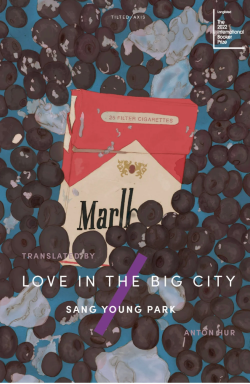
Sang Young Park’s Love in the Big City is a linked novel that captures the love, friendship, illness, loneliness, and urban sensibility of a young queer man living in Seoul. The work begins in a lively and humorous voice, but beneath it runs a deep current of failed love, distance from family, social stigma, death, and loss. In this novel, Seoul is not merely a backdrop, but a place where desire and loneliness emerge at the same time.
The importance of this work lies in the fact that Korean literature began to be read in the world literary field through the language of young urban life and queer narrative. Rather than presenting Korean society through grand history or state violence, Love in the Big City reveals it through individual love and everyday life, conversations with friends, and the sensations of clubs, hospitals, and home. The novel shows how modern life in a metropolis can be literary in ways that are deeply private, humorous, and painful at once. In the 2022 list, two Korean writers, Bora Chung and Sang Young Park, appeared at the same time. It was a year in which the multilayered nature of Korean literature became especially visible.
Cheon Myeong-kwan, Whale
2023 Shortlist · Korean · tr. Chi-Young Kim
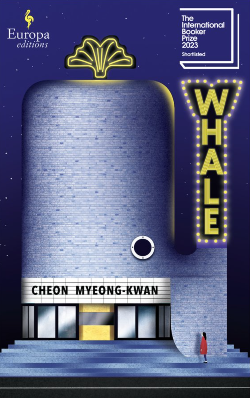
Cheon Myeong-kwan’s Whale is a novel driven by immense narrative energy. Its story overflows with strange characters, violence and desire, business and collapse, the lives of women, folkloric imagination, and cinematic scenes. Rather than directly explaining a particular period of modern Korean history, the novel pushes the modernization of the Korean Peninsula and the desires of capital into an allegorical and exaggerated narrative.
Whale shows that Korean literature is not introduced to the world only through a minimalist and restrained sensibility. On the contrary, the novel draws readers in through excess, vitality, grotesquerie, and the power of popular storytelling. Its selection as a finalist for the International Booker Prize was an event that revealed another face of Korean literature: a rough, expansive, and folkloric energy that can resonate powerfully with readers around the world.
Zou Jingzhi, Ninth Building
2023 Longlist · Chinese · tr. Jeremy Tiang
Zou Jingzhi’s Ninth Building is an autobiographical novel set during the Cultural Revolution. Through memories of childhood and youth, the author looks back on the upheavals of modern Chinese history. Yet the work presents the era not through grand political slogans, but through scenes of everyday life and personal memory. State violence does not exist only as a large historical event; it seeps into daily life, relationships, and the experience of growing up.
The significance of this work lies in the way it treats the wounds of modern Chinese history in a retrospective and restrained manner. Ninth Building shows that literature of memory does not always need to take the form of direct accusation. Sometimes the violence of an era remains longer in a person’s coming-of-age, in the name of a building, and in small scenes of everyday life.
Hwang Sok-yong, Mater 2-10
2024 Shortlist · Korean · tr. Sora Kim-Russell & Youngjae Josephine Bae
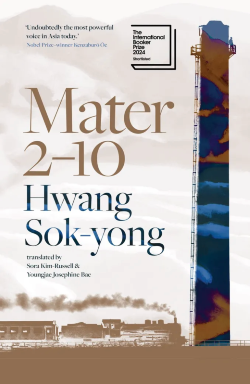
Hwang Sok-yong’s Mater 2-10 is a work that weaves modern and contemporary Korean history on a grand scale through the family history of railway workers. The title, Mater 2-10, refers to the name of a steam locomotive, and in the novel the railway becomes more than a means of transportation. It is a symbol that runs through the memories of colonialism, industrialization, the labor movement, division, and modern Korean history. The story of one family overlaps with the long historical track of the Korean Peninsula.
This work brings together Hwang Sok-yong’s long-standing concerns: the people, labor, history, division, and industrialization. Its selection as a finalist for the International Booker Prize shows that the collective memory of modern Korean history can still be read as a question for world literature. Mater 2-10 proves that Korean literature can encounter the world not only through the inner life of the individual, but also through labor, history, and the memories of generations.
Saou Ichikawa, Hunchback
2025 Longlist · Japanese · tr. Polly Barton
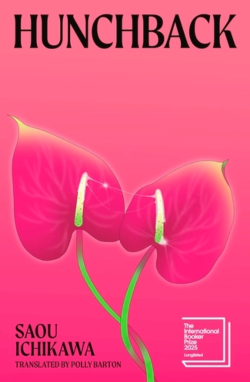
Saou Ichikawa’s Hunchback is a provocative work that deals with the body and desire of a disabled woman writer, as well as writing, sexual imagination, and the social gaze. The protagonist is a person with a severe disability, sharply aware of both her physical condition and the limits imposed on her by society. The novel does not ask the reader for pity or sentimental consolation. Instead, it raises questions about the body and desire in an uncomfortable and direct way. The fact that Ichikawa herself became the first physically disabled winner of the Akutagawa Prize also marks a significant shift within the Japanese literary field surrounding this novel.
The significance of this work lies in the way it brings questions of disability, gender, desire, and literary self-expression to the forefront of Japanese literature. Hunchback shows that the “body” is not merely a personal condition, but a social and political space. Its nomination for the International Booker Prize suggests that readers of world literature are increasingly encountering more diverse bodies and voices within East Asian literature.
Hiromi Kawakami, Under the Eye of the Big Bird
2025 Shortlist · Japanese · tr. Asa Yoneda
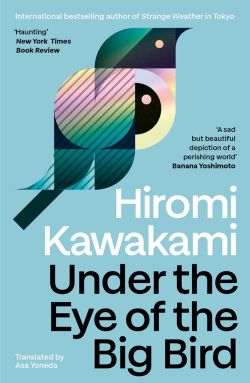
Hiromi Kawakami’s Under the Eye of the Big Bird is a work that imagines humanity in the distant future. Human beings are no longer born or live in the way we know today. In a world where humans have become beings artificially managed, separated, and observed, the novel quietly and strangely asks questions about life, species, care, loneliness, and evolution.
Hiromi Kawakami is a writer who gently blurs the boundaries between the everyday and the fantastic, the human and the nonhuman. In this work, she uses a posthuman imagination to ask again what it means to be human. It is an example of how East Asian literature is exploring not only the memory of the past, but also the bioethics of the future and anxieties about species. Under the Eye of the Big Bird poses a quiet but immense question: what can change before a human being is no longer human?
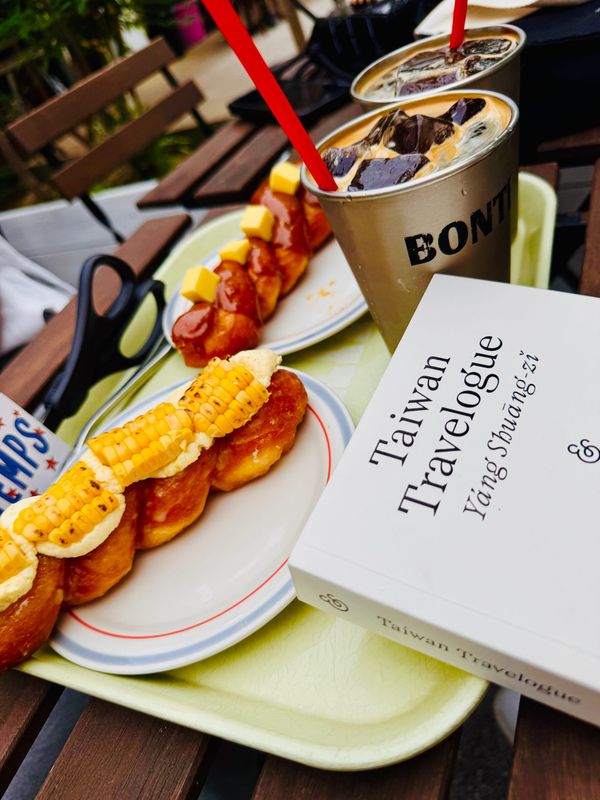
Yáng Shuāng-zǐ, Taiwan Travelogue
2026 Winner · Mandarin Chinese (Taiwan) · tr. Lin King
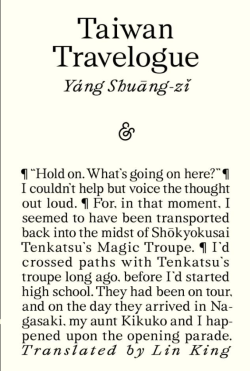
Yáng Shuāng-zǐ’s Taiwan Travelogue is a work set in Taiwan under Japanese rule in the 1930s. It tells the story of a Japanese writer traveling through colonial Taiwan with a local interpreter, a woman skilled in cooking, and takes the form of a framed narrative presented as the “translation” of a discovered Japanese memoir. Weaving together travel writing, food culture, translation, the subtle relationship between two women, and the colonial gaze, the novel shows how Taiwan as a place is consumed through the eyes of empire while also preserving its own memories and sensations.
The significance of this work is twofold. First, it marks the full emergence of Taiwanese literature on the central stage of world translated literature. Yáng Shuāng-zǐ and translator Lin King received the prize as, respectively, the first Taiwanese writer and the first Taiwanese American translator to win it. Second, the work became the first novel originally written in Mandarin Chinese to win the International Booker Prize. When we speak of East Asian literature, the framework too often centers on Korea, Japan, and China. Taiwan Travelogue unsettles that structure. The novel shows that Mandarin-language literature does not have to reach the world only through historical narratives from mainland China, and that Taiwan’s colonial experience, women’s narratives, and the sensory world of food and travel can themselves carry the memory of an era.
How Is East Asian Literature Being Read?
As one follows this list, several patterns begin to emerge.
First, Korean literature has been read through the body and violence, the city and queerness, labor, and the memory of modern and contemporary history. Han Kang, Bora Chung, Sang Young Park, Cheon Myeong-kwan, and Hwang Sok-yong are very different writers, yet their works all reveal the wounds and energies left by the compressed modernity of Korean society.
Second, Japanese literature has been read through the disappearance of memory, the vulnerability of the body, ethical violence, and the exploration of a posthuman future. The works of Kenzaburō Ōe, Yōko Ogawa, Mieko Kawakami, Saou Ichikawa, and Hiromi Kawakami raise a wide range of questions, from the memory of postwar Japan to the future beyond the human.
Third, Sinophone literature has entered the world literary field through the state and memory, historical allegory, experimental imagination, and the questions of Taiwan’s colonial experience and identity. Yan Lianke and Can Xue show two very different poles of mainland Chinese literature, while Wu Ming-Yi and Yáng Shuāng-zǐ show global readers what kinds of time and sensation Mandarin-language literature can create beyond the mainland.
The East Asian literature read by the International Booker Prize is not a single, unified regional literature. It is a literature in which the body resists, memory disappears, the state presses upon the individual, the city holds love and loneliness, and the time of colonialism and modernization has not yet come to an end.
For East Asian literature to appear on the stage of world literature does not simply mean that more translations are being published. It means that the histories and sensations, wounds and imaginations of this region are meeting global readers in new languages. Translation moves literature, but it is also a way for a region to be read anew. The structure of the prize, in which the author and translator share the prize money, reminds us every year that for a book to reach the world, it has always needed two people—or two languages.
From Han Kang’s The Vegetarian in 2016 to Yáng Shuāng-zǐ’s Taiwan Travelogue in 2026, the first ten years of the International Booker Prize show how widely and deeply East Asian literature has become part of world literature. And the list is not yet complete. East Asian books will continue to move into other languages, carrying into the world the time and memory of a region we have not yet fully read.