Was Gyeongbokgung Always the Center of Joseon?

The Memory of a Palace Burned, Emptied, and Rebuilt
Gyeongbokgung is a place so familiar that we often know it less well than we think.
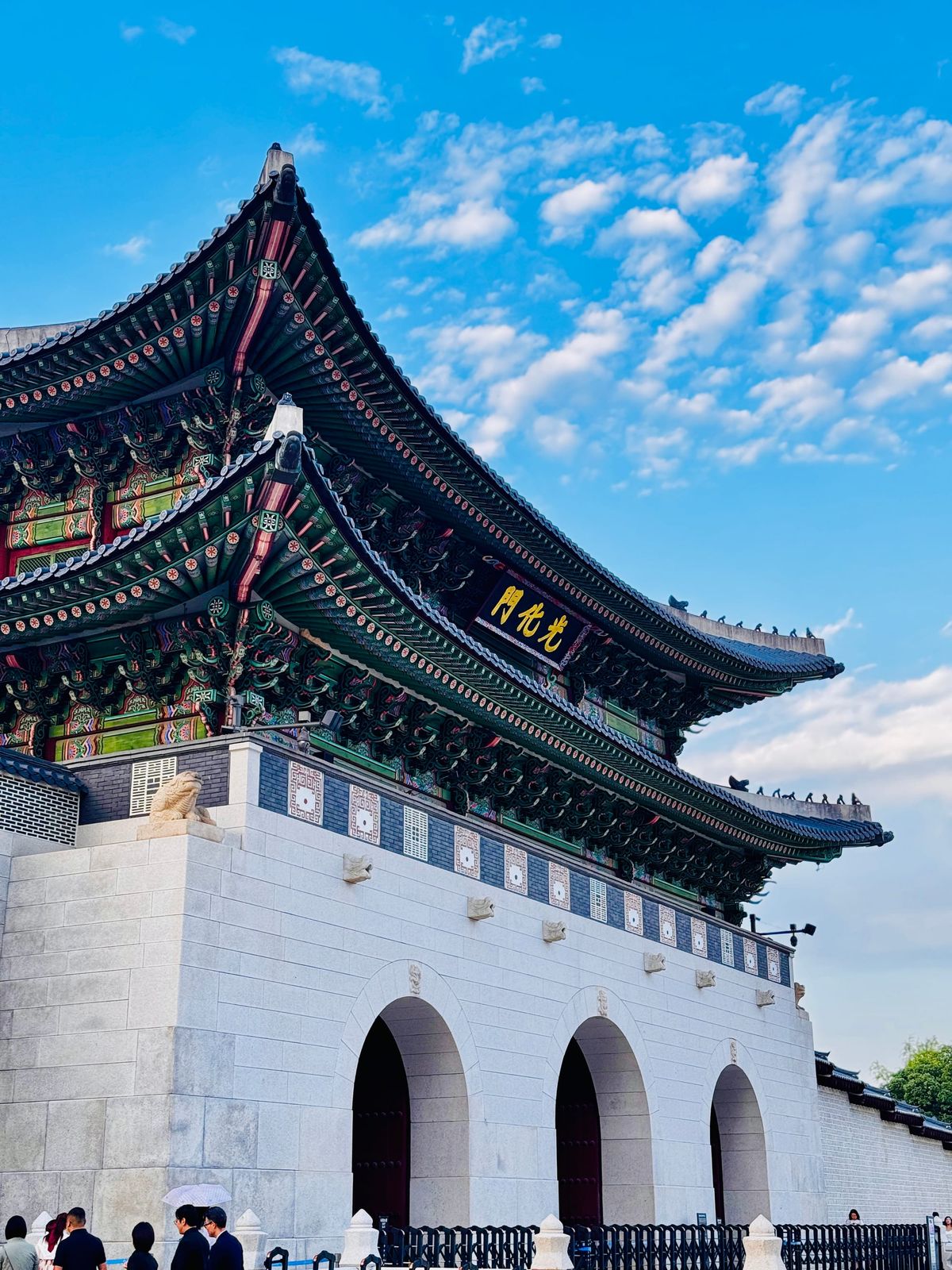
Seoul’s representative palace. The symbol of the Joseon dynasty standing behind Gwanghwamun. The historical site most foreign visitors seek out first. We naturally think of Gyeongbokgung as the central palace of Joseon. As its name suggests, we imagine it as the dynasty’s main royal palace, the face of the kingdom, an old stage of power placed in the heart of Seoul.
That is not wrong. Gyeongbokgung was built after the founding of Joseon, when King Taejo Yi Seong-gye chose Hanyang as the new capital. It was the first place where the ideals and order of the Joseon dynasty were translated into space. Buildings such as Gwanghwamun, Geunjeongjeon, Gyeonghoeru, and Sajeongjeon visually expressed the authority of kingship and the state.
But the actual history of Gyeongbokgung is far more complex than the vague image many of us carry.
Gyeongbokgung was not always the center of Joseon. Rather, for long stretches of time, it was a palace that burned, was abandoned, gave way to other palaces, was rebuilt, and was damaged again. The Gyeongbokgung we see today is less a place of uninterrupted royal centrality than a site of memory that has been broken and reconnected many times.
Gyeongbokgung was built with the beginning of Joseon. A new dynasty needed a new capital and a new palace. Leaving Goryeo’s capital of Gaegyeong and establishing a new political center in Hanyang was not simply an act of relocation. It was a declaration of the kind of order on which Joseon would stand. A palace backed by mountains and facing south. In front of it, government offices and streets; beyond them, the city where the people lived. The palace was not only the king’s residence, but also a stage that made the order of the state visible.
And yet Gyeongbokgung was not a peaceful palace from the beginning.
From the early years of Joseon, the Strife of Princes and struggles for power left dark shadows in the palace’s memory. The palace built by Taejo for a new dynasty soon witnessed bloody political conflict among his sons. Joseon kingship was not made only upon splendid dancheong and solemn halls. It was also made through betrayal within a family, the instability of succession, and the violence required for a new dynasty to stabilize itself.
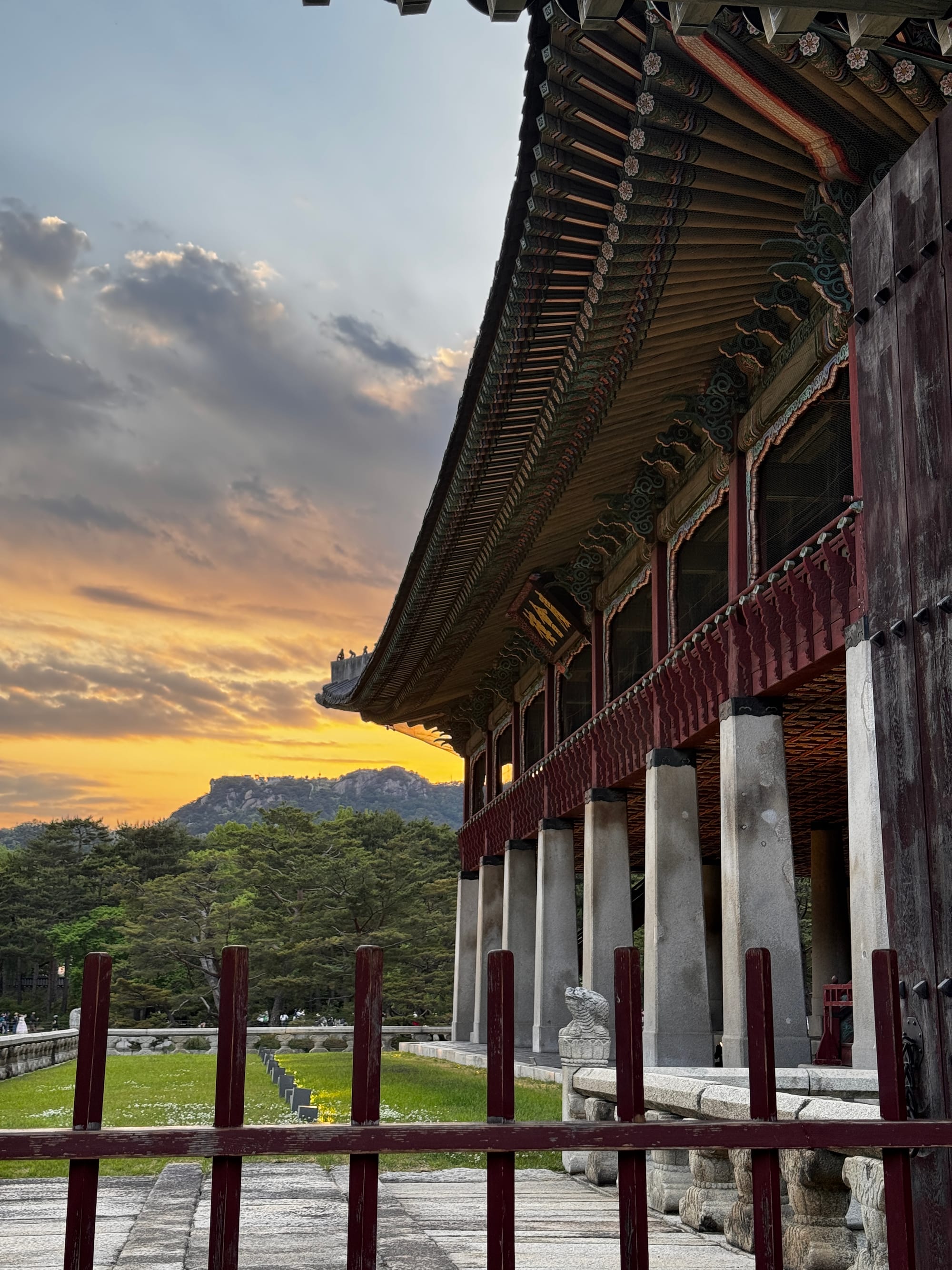
Later, Gyeongbokgung functioned as the main palace of early Joseon. Kings such as Sejong governed from this palace, and Joseon’s institutions and culture took shape during this period. The Confucian state order, the world of writing and scholarship, ritual and bureaucracy that we associate with Joseon were deeply connected to the space of Gyeongbokgung.
But in 1592, the Japanese invasions of Korea changed the fate of the palace.
After war broke out and King Seonjo left Hanyang, Gyeongbokgung burned. Several accounts have been passed down about who set the fire. Some say the Japanese army burned it down; others say that people angered by the royal court’s abandonment of the capital set fire to the palace and government offices. Either way, what is clear is that this event made Gyeongbokgung not merely a place damaged by war, but a space symbolizing the crisis of the Joseon state and the fracture of public sentiment.
A capital abandoned by its king.
A palace in flames.
Authority collapsed.
In this way, Gyeongbokgung fell from the center of Joseon into ruin.
What is even more interesting is what happened next. After the Japanese invasions, Gyeongbokgung was not immediately rebuilt. Instead of restoring it, the kings of late Joseon continued to rule from Changdeokgung and Changgyeonggung. Changdeokgung in particular, with its rear garden and natural landscape, became the palace where late Joseon kings actually spent more time. We remember Gyeongbokgung as Joseon’s representative main palace, but the politics and daily life of late Joseon revolved for a considerable period around Changdeokgung.
Many people do not know this. Standing before Gwanghwamun, it feels as if Gyeongbokgung had always been the center of Joseon. But after the Japanese invasions, Gyeongbokgung remained close to ruin for roughly 270 years. The official ideal of Joseon may have resided in Gyeongbokgung, but the actual life of the late dynasty was closer to Changdeokgung.
In this sense, Gyeongbokgung is a fascinating palace. It was the center, but for a long time it was empty. It was the main royal palace, but not the actual residence of power. It was the most symbolic palace, yet also the palace most marked by absence.
Then, in the nineteenth century, Gyeongbokgung returned to the forefront of history.
Heungseon Daewongun, the father of King Gojong, pushed for the reconstruction of Gyeongbokgung in order to strengthen royal authority. Rebuilding the ruined main palace was not simply an architectural project. It was a political project aimed at restoring weakened kingship and the authority of a shaken Joseon. By rebuilding the palace from ruins, Daewongun sought to show that the Joseon dynasty was not yet over.
But the reconstruction of Gyeongbokgung created new conflicts. It required enormous financial resources and placed heavy burdens on the people. Wonnapjeon, a so-called voluntary contribution that functioned in practice as a forced donation, was collected, and the issuance of dangbaekjeon caused economic disorder. The palace was a symbol of restored royal dignity, but for the people it could also become an object of burden and resentment.
Behind the splendor of Gyeongbokgung’s reconstruction lay the fiscal instability of the late Joseon state and the suffering of ordinary people.
And the palace would become the stage of tragedy once again.
In 1895, Empress Myeongseong was assassinated inside Geoncheonggung, within the grounds of Gyeongbokgung. This was the Eulmi Incident. The murder of Joseon’s queen inside the palace by forces linked to Japan was a shocking event that revealed how severely the sovereignty of Joseon and the safety of the royal household had been shaken. The palace was no longer the secure center of royal power. It had become a space into which foreign violence had reached the innermost quarters of the royal family.
Afterward, King Gojong left Gyeongbokgung and took refuge at the Russian legation. Gyeongbokgung once again moved away from the center. Not long after being rebuilt as Joseon’s main palace, it became a wounded space once more.
During the Japanese colonial period, the damage to Gyeongbokgung became even more blatant.
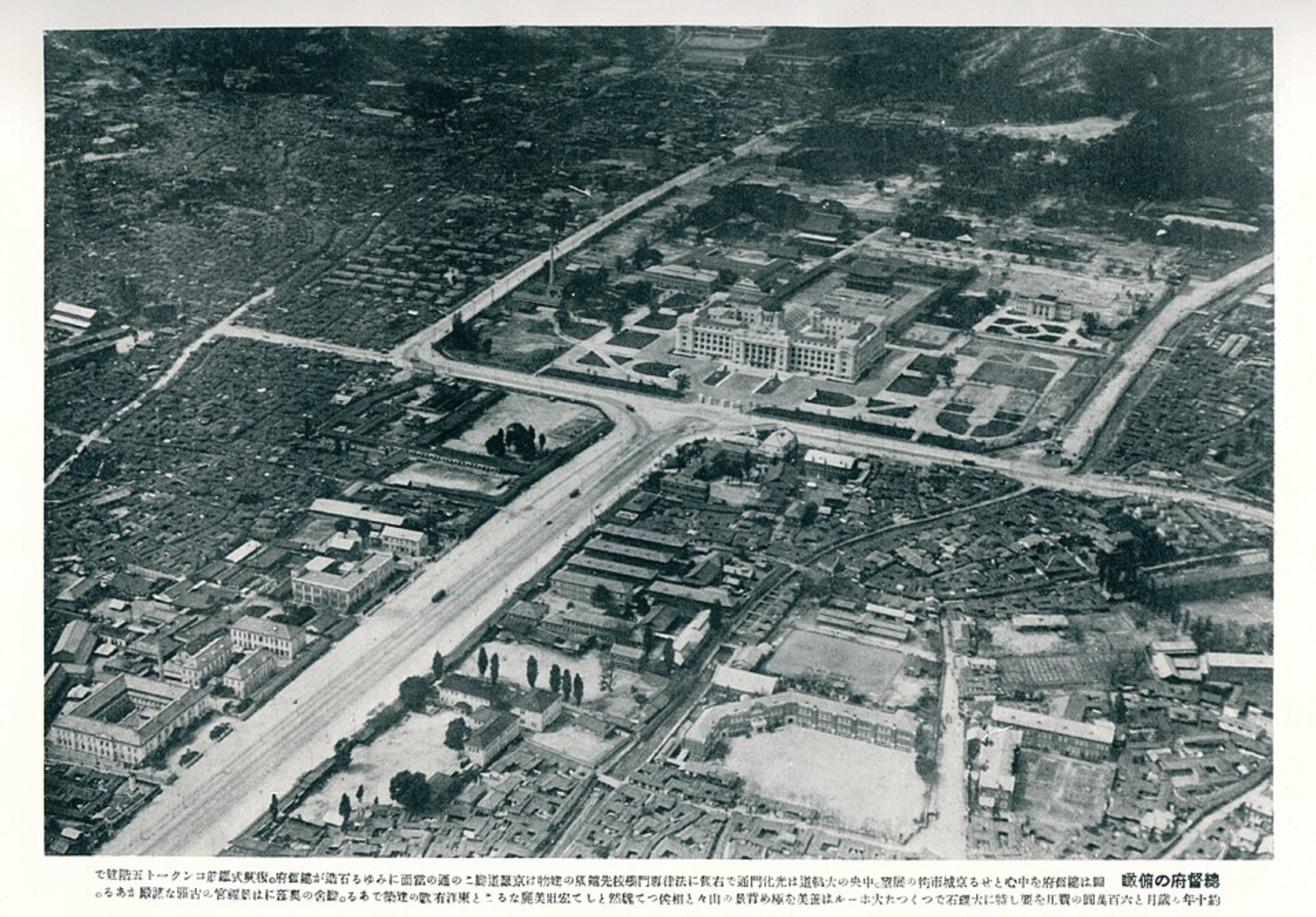
Japan built the Government-General of Korea building inside the palace grounds. This massive modern structure stood as if blocking the axis between Gwanghwamun and Geunjeongjeon, and the palace space of the Joseon dynasty was transformed into the administrative center of colonial power. This was not merely architecture. It was an act by which colonial power occupied Joseon’s symbolic space and built its own authority over it.
Many palace halls were demolished or relocated, and the original order of Gyeongbokgung was severely damaged. A space that had symbolized Joseon kingship became a stage for colonial rule. During this period, Gyeongbokgung became not simply an old palace, but a place containing memories of domination and humiliation.
Even after liberation, the wounds of Gyeongbokgung did not immediately heal.
Seoul changed rapidly through war and division, military rule and industrialization. Gyeongbokgung, too, was not always respected as a complete historical space. At times, awkward buildings or functions were layered onto it according to the needs of the era and the judgments of power. The former Government-General building, once used as the National Museum of Korea, stood in front of Gyeongbokgung for a long time. The axis of Gwanghwamun and the palace was altered from its original form, and the palace remained in modern Seoul in a state far from complete restoration.
From the 1990s onward, full-scale restoration projects began, and Gyeongbokgung gradually started to recover parts of its original form. The Government-General building was demolished, and Gwanghwamun and several palace buildings were restored. The Gyeongbokgung we walk through today is an old palace, but also a historical space reconstructed by the modern state. It contains not only the memory of Joseon, but also the damage of colonialism, the confusion after liberation, and the restoration desires of modern Korea.
To walk through Gyeongbokgung, then, is not simply to return to the Joseon period.
It is to pass through the founding of Joseon, the ruins of the Japanese invasions, the age of Changdeokgung, the ambition of Heungseon Daewongun and the burdens placed on ordinary people, the tragedy of Empress Myeongseong’s assassination, the shadow of the Government-General building, and the restoration ambitions of modern Korea.
Gyeongbokgung is not a place that contains only one era. It is a place where the desires and violence, symbols and memories of many eras overlap.
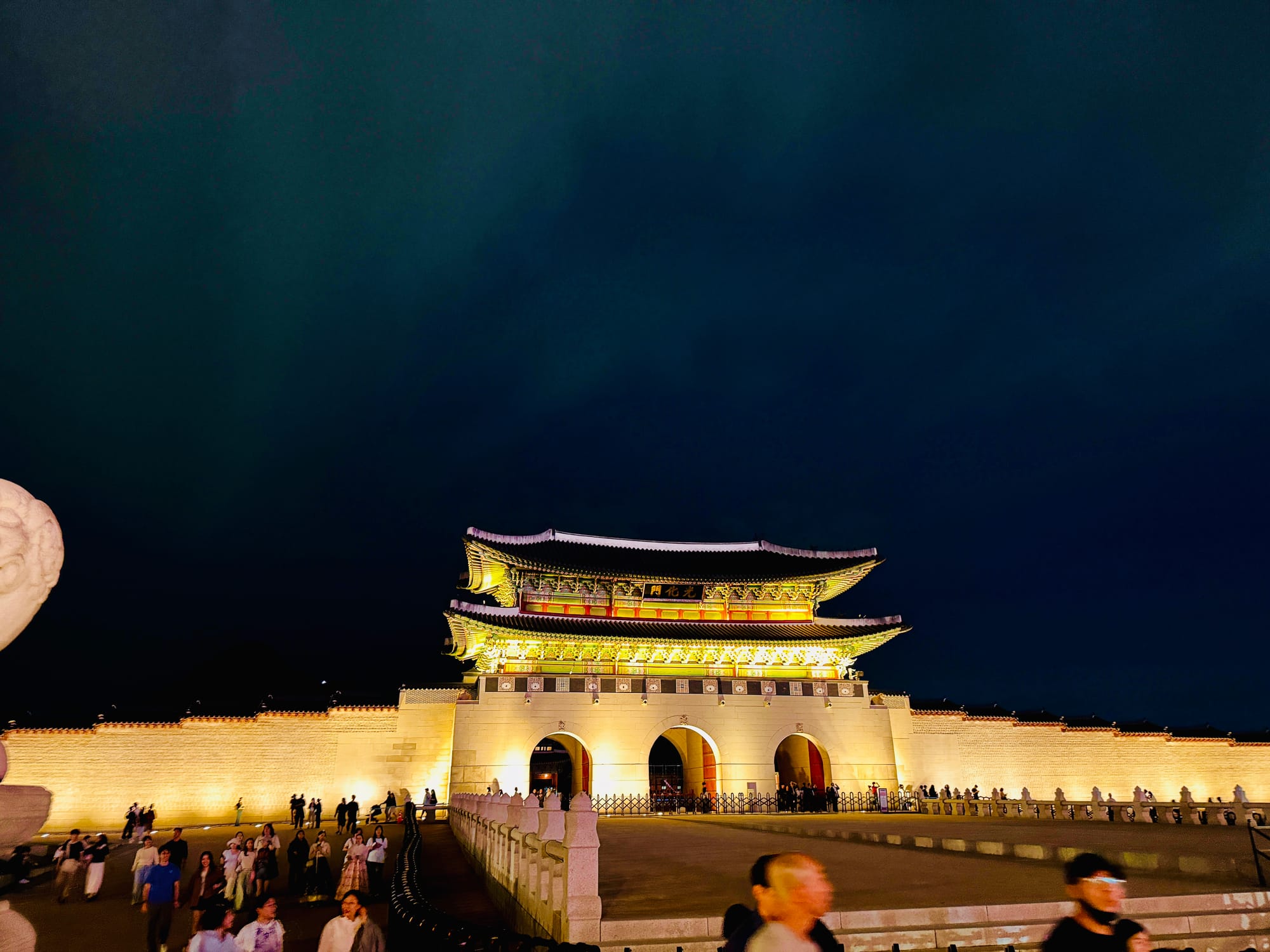
That is why Gyeongbokgung is beautiful, but not merely beautiful. Geunjeongjeon and Gyeonghoeru shining under the lights are magnificent. The sight of people in hanbok walking along the stone paths is vivid and joyful. But beneath that scenery lie long absences and destruction, political ambition and colonial damage, and the long time of restoration.
When we call Gyeongbokgung “Joseon’s representative palace,” the statement is correct, but insufficient. Gyeongbokgung is a palace that shows the beginning of Joseon, but it is also a palace that shows Joseon’s failures and wounds. It is a space that held the ideal of royal authority, and also a space that revealed how easily that authority could be shaken.
Perhaps that is why Gyeongbokgung continues to be read anew today.
By day, it appears as a historical site; by night, under the lights, it appears as a scene. To tourists, it is a symbol of Korean beauty. To Seoulites, it is the center of the city, familiar and yet sometimes strange. To the state, it is a historical space to be restored. To individuals, it is a place of memory preserved in a single photograph.
But if we peel back these layers even slightly, Gyeongbokgung asks us:
What makes the center of a country?
What should be remembered, and what should be restored?
Does the past disappear, or does it continue to return under different names and forms?
Gyeongbokgung was the center for a long time.
And for a long time, it was not the center.
That paradox is what makes this palace even more compelling.
When we pass through Gwanghwamun today and enter Gyeongbokgung, we are not simply entering an old palace. We are entering one of the most complex stages left behind by Korean history: a space where the ideals and ruins of a dynasty, restoration and damage, memory and forgetting all stand together.
Gyeongbokgung stands in the middle of Seoul in this way.
Not as a completed past, but as a memory that must continue to be read again.