Kyoto, a City Where Time Takes Shape

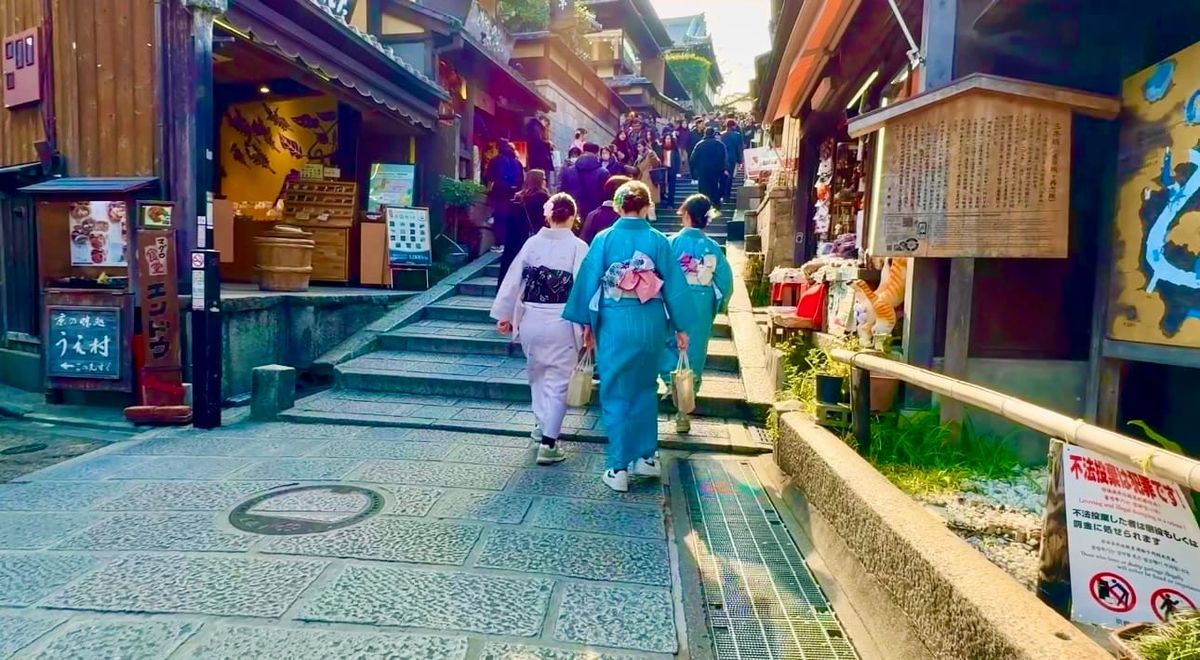
Reading Kyoto’s Time on Foot
Kyoto is a city that draws closer at walking speed. Its texture reveals itself less from a passing car window than when one moves slowly through its alleys, riversides, and sloping streets. The low lines of roofs, the darkness beneath the eaves, moss on stone walls, the signs of old shops, and the sudden outline of a pagoda appearing at the edge of one’s vision — in Kyoto, time does not feel like a distant past. It comes near, like a surface one can almost touch at the height of one’s footsteps.
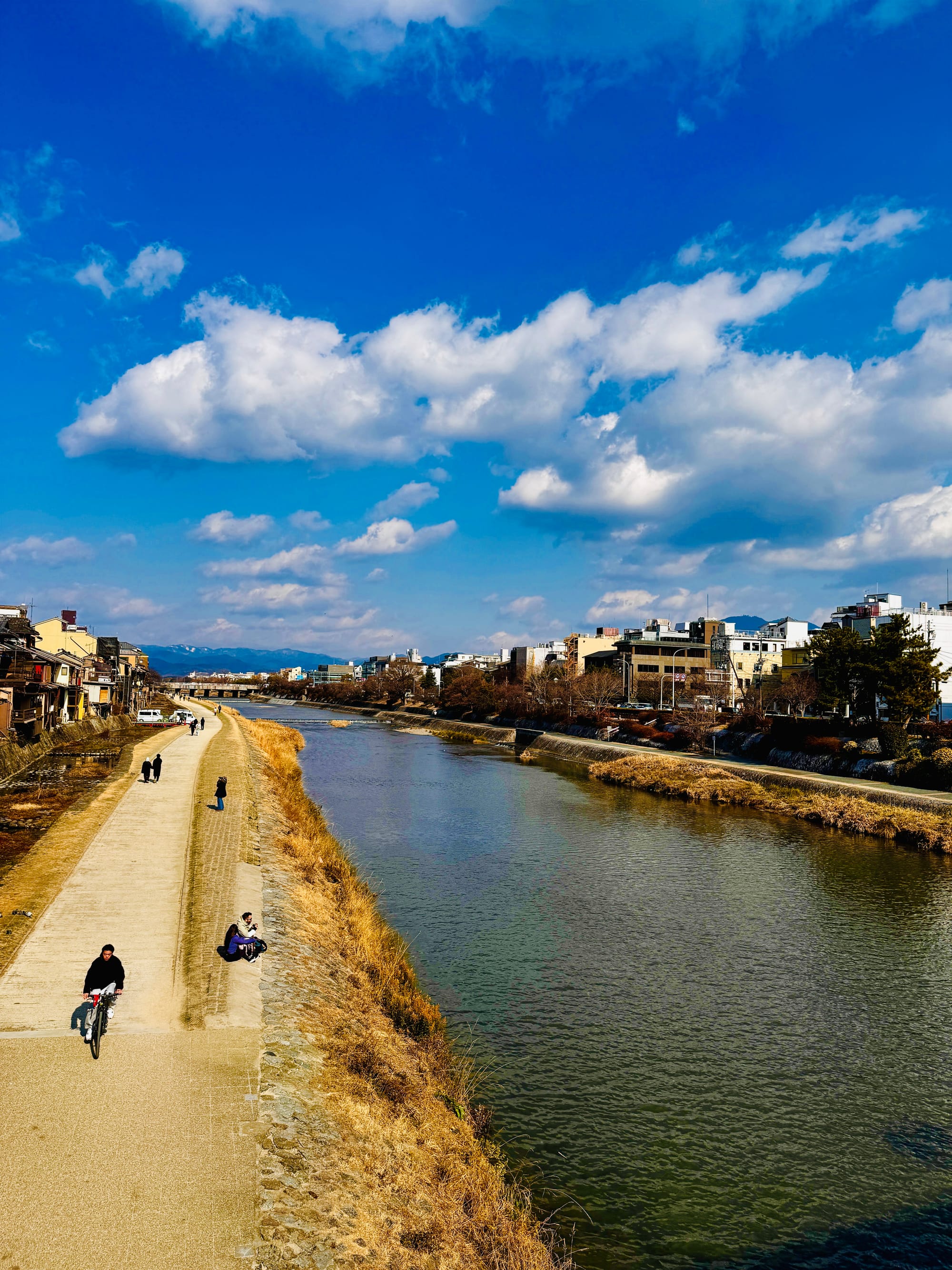
Walking along the Kamo River, Kyoto’s first impression is surprisingly spacious. When we think of an old city, we may first imagine narrow alleys or temple gates. But by the river, the sky opens wide, and the water passes low through the center of the city. People walk along the river, ride bicycles, or sit for a while. The scene is not especially dramatic. Rather, it stays in memory precisely because it is not dramatic. Kyoto’s time is often first felt in these open spaces: in the river, the sky, the outline of the mountains, and the slow movement of people passing between them.
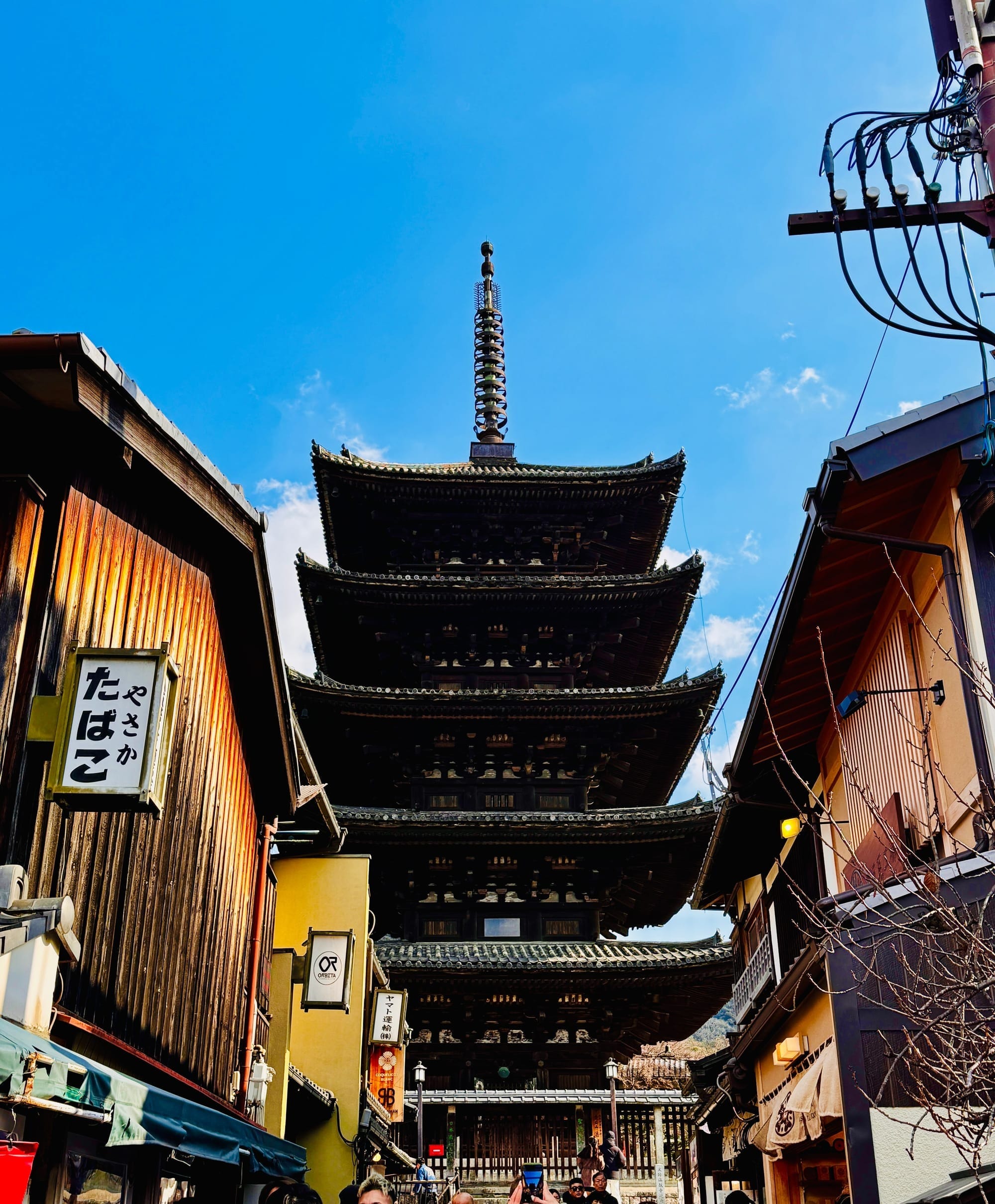
As one leaves the river and enters the Higashiyama area, the density of the city changes. The streets become narrower, the roofs lower, and the colors of the wooden buildings settle into a deeper shade. Then, when Yasaka Pagoda appears between the alleys, the landscape suddenly gains a direction. The pagoda does not overwhelm the city. Though it rises high, it forms a balance with the low eaves around it, the wooden walls, and the distant mountains. Kyoto’s beauty becomes clear at this point. This is a city remembered not by the assertion of height, but by the way different heights are placed without discord.
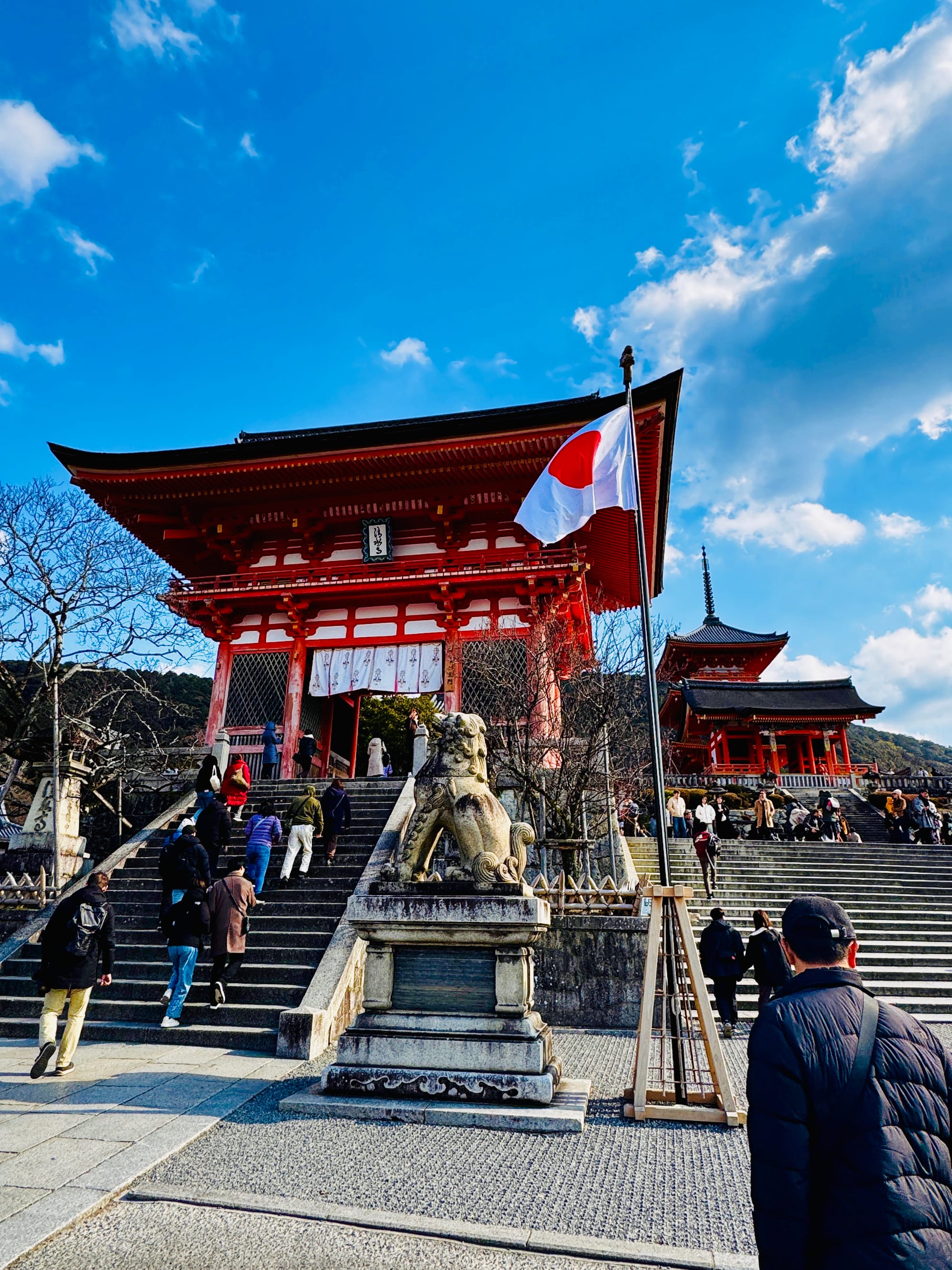
On the way to Kiyomizu-dera, red, black roofs, the shadows of trees, and the brightness of the sky enter a single frame. Kyoto’s colors are vivid, but not noisy. Red pillars, dark wood, white clouds, and blue sky do not push one another away. Even intense colors acquire a certain restraint within this city. Kyoto’s red is not merely decorative. It becomes gates, pillars, and thresholds, slowly guiding the eye. It is perhaps the clearest mark left by human hands in the landscape, yet it does not disturb the balance between nature and architecture.
As one walks, it becomes difficult to describe this city simply as a “preserved past.” Preservation suggests leaving something as it was, but Kyoto’s time is more complex. Here, oldness is continually maintained, used, observed, and returned to the surface of daily life. Wooden buildings age but are not abandoned. Gardens appear natural, yet they are not nature left entirely untouched. Alleys are old, but they remain part of a living city through which people still come and go. In Kyoto, time is not stopped. It continues to dwell in the present by borrowing old forms.
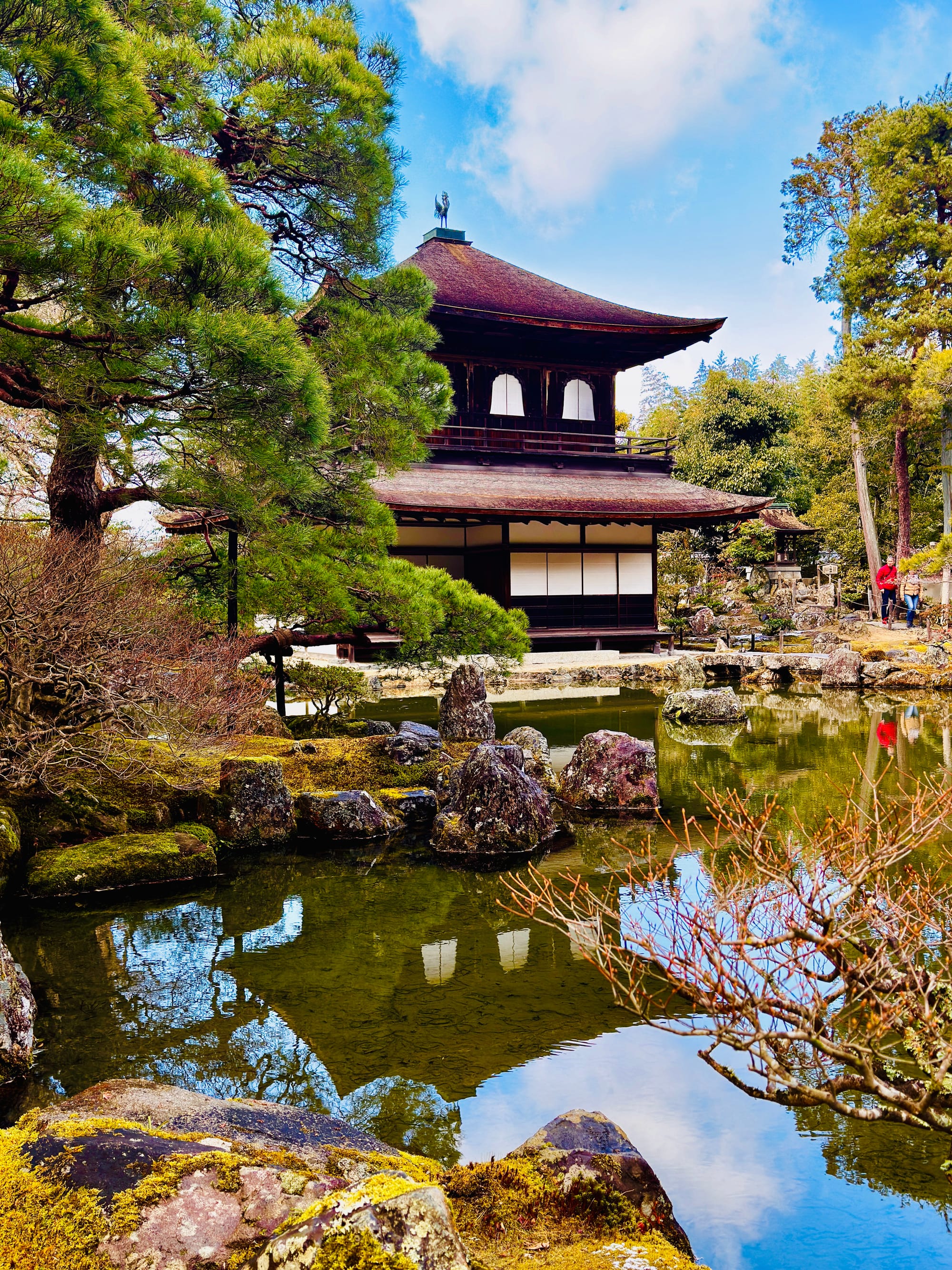
Around the gardens of Ginkaku-ji, this feeling becomes more delicate. Sand creates a sense of flow despite not being water, and stones guide the gaze slowly despite never moving. Pines seem to grow and remain still at the same time. Nature is not simply left as it is; it is arranged so that it may be looked at for a long time. Yet that arrangement does not erase nature. Rather, when human touch and the time of nature overlap without disturbing each other, Kyoto’s time takes on its clearest form. What grows and what is tended, what changes and what remains, exist together within a single landscape.
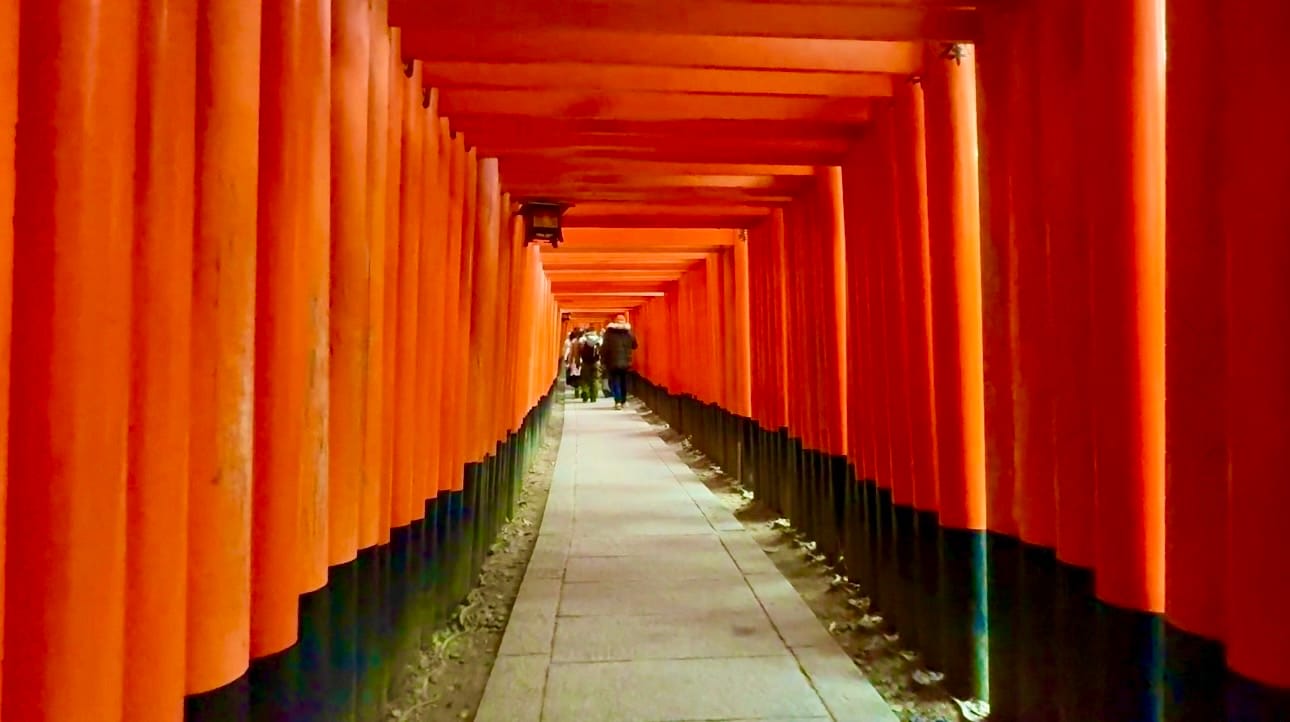
Beneath the red torii gates of Fushimi Inari, another kind of time opens. A single gate means passage, but when countless gates repeat, they become a path and a rhythm. As the same color, the same form, and the same intervals continue, the walker’s senses slowly begin to change. What matters is not so much arriving somewhere, but the moment when the body becomes accustomed to passing through the same gates again and again. In Kyoto, walking is not simply moving from one place to another. The act of walking itself becomes a way of reading the city.
In this sense, Kyoto may be a city closer to footsteps than to sight. It is better understood when turning into narrow streets, climbing slopes, passing through the shade beneath eaves, and feeling the wind along the river. A pagoda appears suddenly. An alley is quieter than expected. A garden makes one look longer than anticipated. The river opens the city outward again. Kyoto’s time does not lie in points on a map, but in the rhythm of walking that connects them.
Kyoto’s time does not remain only in temples and gardens. Entering the old hall of a coffee house, one encounters another era in the dark wood, low lighting, and worn entrance. This is neither grand nor ceremonial, but a lower, more everyday kind of time. Yet it is precisely because of this lower time that Kyoto does not feel like a preserved specimen. Old things still open their doors, brew coffee, and welcome people.

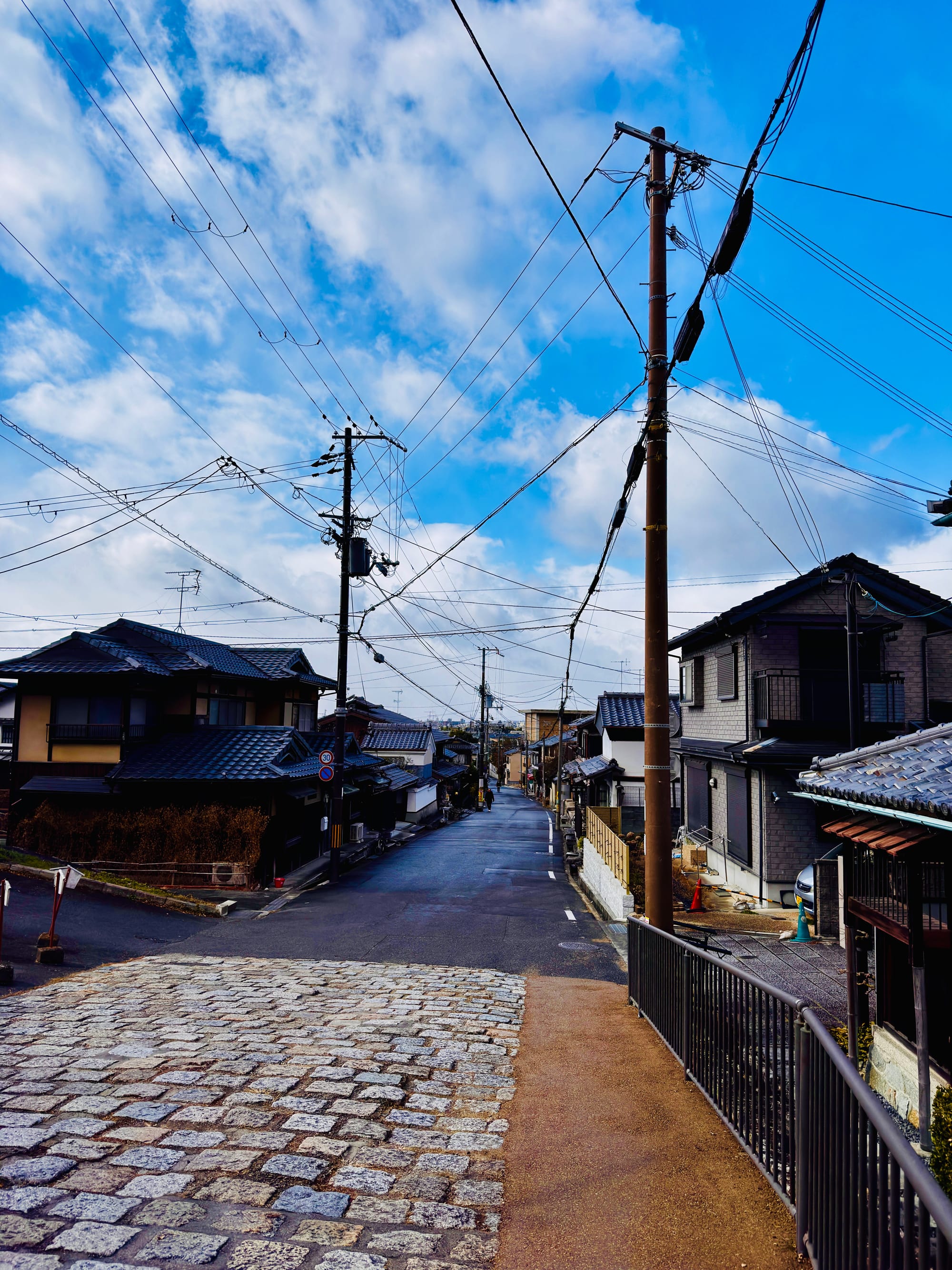
When one enters the alleys, that time extends even further. Utility poles and wires, the windows of low houses, bicycles leaning against walls, and afternoon shadows widen the depth of the city beyond its temples. Oldness does not always remain in a solemn form. Sometimes it is beside a coffee cup, in the light reflected on a glass door, or in the color of evening at the end of an alley. Kyoto’s time is not history viewed from above, but something closer to the small surfaces encountered on the street.
The weather also makes the city readable again. When snow falls over dark wooden buildings, the lines of the roofs become sharper. When sunlight enters through the clouds, the colors of stone and wood deepen differently. In Kyoto, weather is not a background. It is another layer that changes the city’s expression. The same street looks different depending on the color of the sky, and the same roof can seem to belong to another time depending on the direction of the light.
What one often feels while walking through Kyoto is that this city does not try to explain the past. Instead of explaining, Kyoto arranges. It places roofs and sky, trees and stones, water and light, red gates and dark paths, old cafés and quiet alleys beside one another. Kyoto’s beauty does not come simply from the fact that it has many old places. It comes from the fact that old things still remain in relation to one another. Roofs still meet the sky, trees still grow, water still flows, and stones still hold their place. Red gates continue to form paths, and shops in the alleys still turn on their lights. Kyoto deepens not because everything remains unchanged, but because what changes and what remains seem to accept each other at the same pace.
In Kyoto, time does not disappear after passing. It remains in the wind by the river, in the curve of a roof, in the lines of sand in a garden, in the repetition of torii gates, and in the low light of an old coffee shop. As we walk among them, we may find ourselves feeling less as though we are visiting a particular place, and more as though we are slowly observing what kind of form time can take.
Kyoto reveals itself little by little to those who walk. The city cannot be understood all at once; it opens between footsteps. And at that moment, time becomes landscape.