Why I Started Littoral East
A note on reading East Asia through cities, books, objects, and memory.

A note on reading East Asia through cities, books, objects, and memory.
🇰🇷 🇯🇵
I have always loved reading and writing.
For as long as I can remember, I have been drawn to books, essays, magazines, newspapers, and the quiet pleasure of following a thought across a page. Reading has often felt less like a hobby than a way of locating myself in the world. Writing, too, has been a way of arranging what I have seen, felt, and wondered about.
For a long time, much of my attention was directed toward the United States. I studied there, lived there, and came to care deeply about American society, politics, and culture. The United States shaped my intellectual habits in many ways. It taught me to look outward, to think comparatively, and to take ideas seriously.
And yet, after returning to Korea and living here again, I found myself increasingly drawn to the cultures closest to me: Korea, Japan, and China. The more I looked, the more I felt that this region was inexhaustible. Its cities, literature, food, design, films, rituals, objects, and historical memories seemed to contain endless stories.
At first, I considered creating a magazine only about Seoul. Seoul is a city of extraordinary speed and contradiction: ancient and hypermodern, elegant and restless, wounded and ambitious. It would have been enough. But the more I thought about it, the more I realized that Seoul becomes even more interesting when placed beside Tokyo, Taipei, Hong Kong, Shanghai, Kyoto, Beijing, Busan, and countless other cities across the region.
East Asia, as a subject, offers a wider and richer field of imagination.
Littoral East begins from that realization.
The word “littoral” refers to the shore — the place where land meets water. I like the word because East Asia has long been shaped by coasts, ports, islands, crossings, trade routes, migration, war, and exchange. It is a region of peninsulas, islands, rivers, harbors, and dense coastal cities. It is also a region of borders and contact zones, where languages, religions, empires, commodities, books, and memories have moved for centuries.
But Littoral East is not meant to be only a geographic idea. It is also a way of reading.
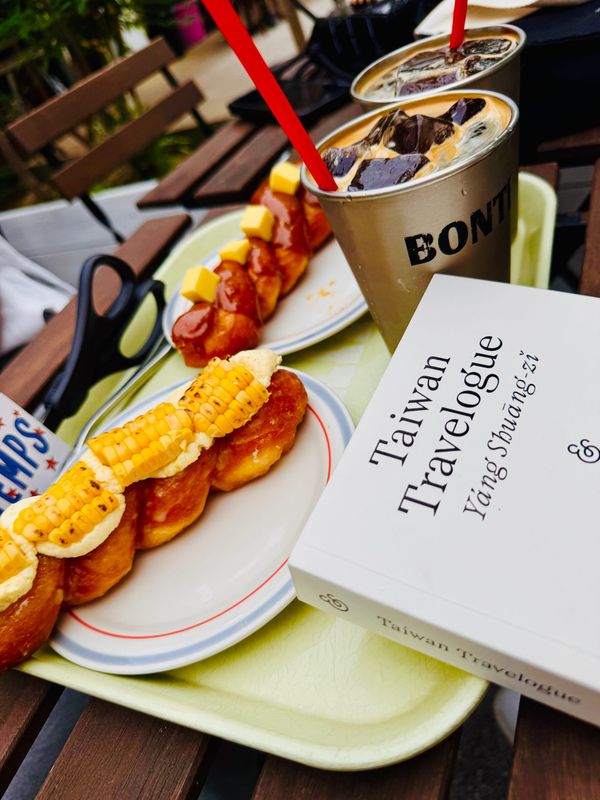
I want this magazine to read East Asia through cities, books, objects, and memory. Through a novel, a teacup, a stationery shop, a museum postcard, a street sign, a café, a port, an old photograph, a translated sentence, or a neighborhood that has been rebuilt too many times to remember what it once was.
One reason I began thinking seriously about this project was the absence I felt in Korea. In the United States, magazines such as The New Yorker and The Atlantic have long provided spaces where politics, literature, culture, criticism, and public life can meet. They are not merely news outlets. They are places of thought, voice, and style.
In Korea, there are excellent newsmagazines, literary journals, academic publications, and cultural platforms. But I often felt the absence of a broad, stylish, reflective humanities magazine — one that could speak across books, cities, history, culture, and everyday life. I wanted a space that could be intellectual without being dry, elegant without being shallow, and global without losing its sense of place.
Littoral East is my attempt to build such a space, however small it may be at the beginning.
East Asian countries share much. Korea, Japan, China, Taiwan, and Hong Kong are connected through long histories of exchange, conflict, influence, translation, migration, religion, war, trade, and popular culture. And yet, they often remain strangely distant from one another. We recognize similarities, but we also feel difference sharply. We share many stories, but we do not always tell them together.
Europe, for all its conflicts, has built a strong habit of regional storytelling. Its cities, wars, philosophers, cafés, novels, museums, and borders are often understood as part of a larger shared civilizational conversation. East Asia has no need to imitate Europe. But perhaps we, too, can learn to tell our regional stories more generously.
Perhaps by reading one another more carefully, we can build a richer sense of where we live.
I do not mean this in a naïve way. East Asia is full of unresolved histories. There are wounds that cannot be smoothed over by culture alone. There are political conflicts, territorial disputes, memories of empire, memories of war, and competing national narratives. But this is precisely why deeper cultural reading matters. To understand a region is not to erase its differences. It is to sit with them, study them, and ask what they reveal.
More than anything, I started Littoral East because I love the cultures of this region.
I love Korean novels, Japanese essays, Chinese history, Taiwanese democracy, Hong Kong cinema, Seoul cafés, Tokyo stationery, ceramic bowls, old bookstores, quiet museums, city walks, and the strange emotional weight of places where the past is never entirely past.
East Asia is not only a region to be analyzed. It is also a region to be read, visited, tasted, held, remembered, and lived with.
In the coming years, East Asia will continue to be one of the regions shaping the world, alongside North America and Europe. Its economies, technologies, cultural industries, political tensions, and creative energies will matter globally. But I believe the world also needs deeper stories from this region — stories beyond headlines, beyond markets, beyond stereotypes, beyond the speed of the news cycle.
Littoral East begins as a small bilingual magazine in Korean and English. English allows these stories to travel beyond the region. Korean keeps the magazine rooted in one of the languages and places from which it begins. In time, I hope it may also open itself to Japanese and Chinese.
This will not be the fastest voice on East Asia. It will try to be a slower, more attentive one.
A magazine of cities and books.
Of objects and memory.
Of culture and everyday life.
Of the shared and fractured worlds along the eastern shores of Asia.
Welcome to Littoral East.