How Seoul Illuminates the Past

Tradition in the Present Tense, Encountered at Gyeongbokgung at Night
Gyeongbokgung at night is different from Gyeongbokgung during the day.
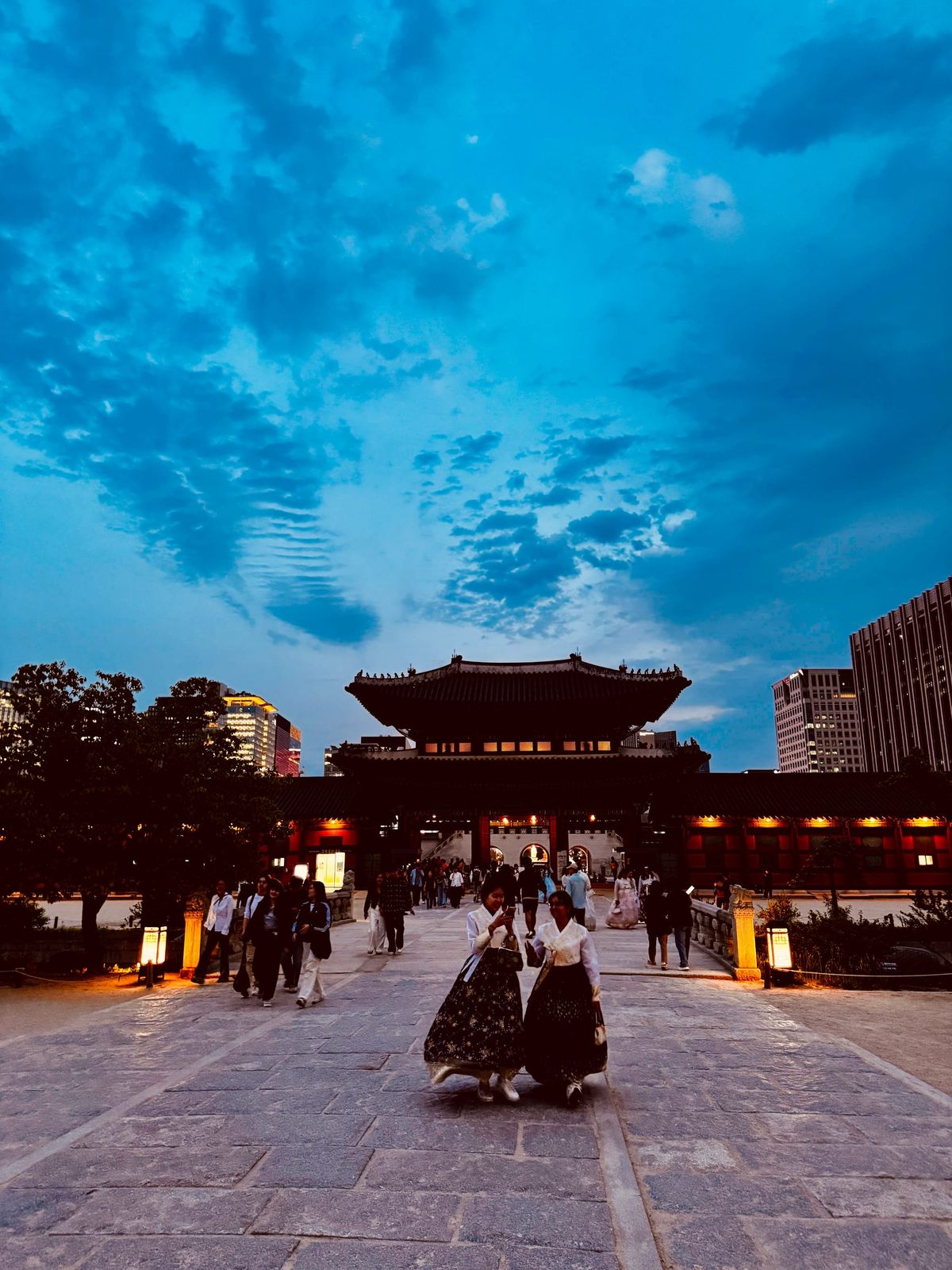
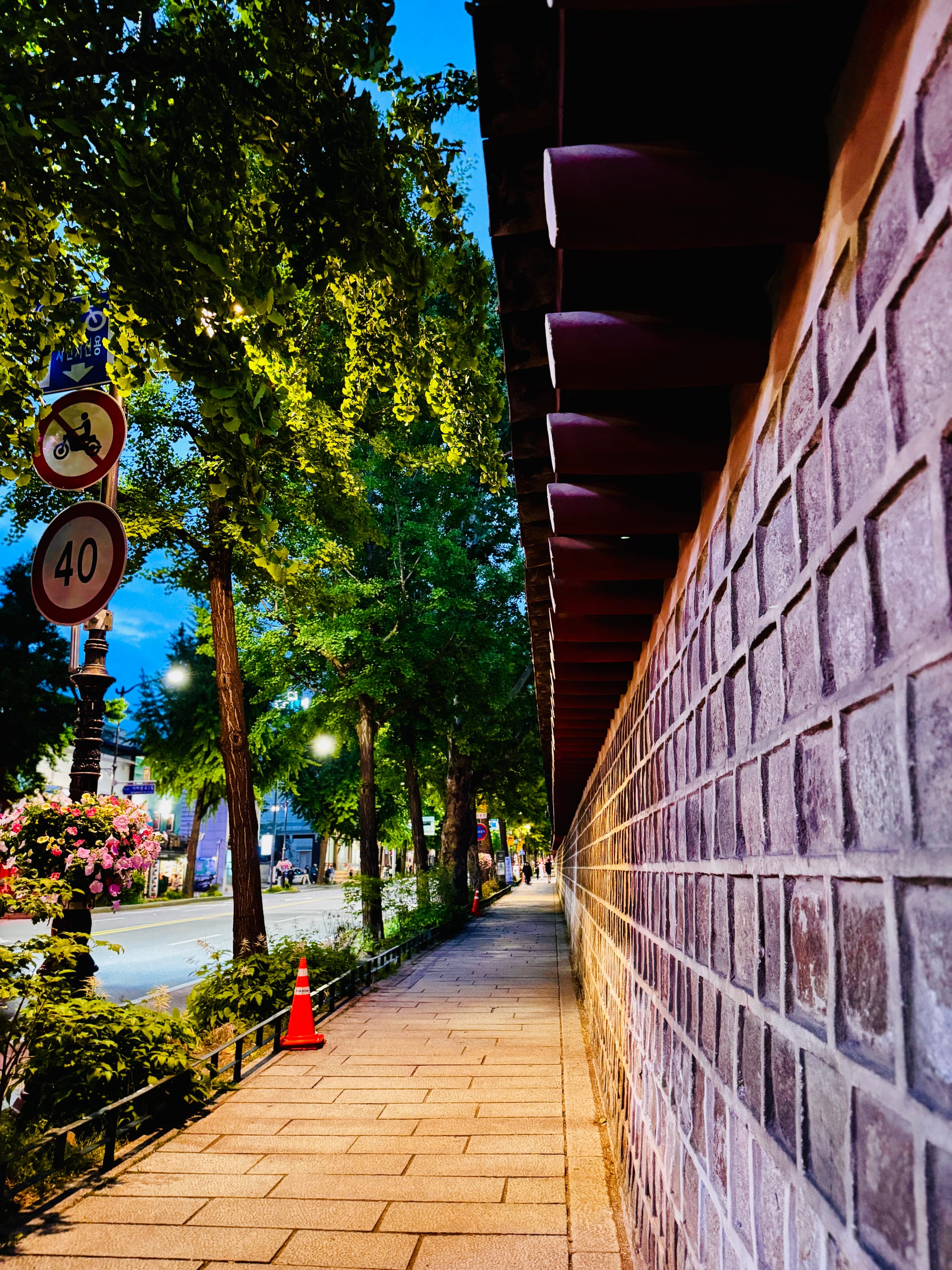
If the palace by day is a historical building, the palace by night is closer to a scene. Darkness pushes the noise of the city slightly into the background, while light slowly reveals the curve of the roof and the shadows of the eaves. The stone paths, walls, gates, and halls that appear clear in daylight become a little more unreal at night. Gwanghwamun is no longer simply an entrance. It looks like the front of a stage rising out of the dark.
After visiting Gyeongbokgung during its night opening, I found myself thinking about the way Seoul deals with the past. Seoul is a city that changes quickly. Old buildings are demolished, old alleys are redeveloped, and the memories of neighborhoods are often buried beneath the language of new apartments and commercial districts. Yet at the same time, Seoul actively calls certain pasts back into view. Palaces are dressed in light, people dress in hanbok, tourists carry cameras, and the past becomes an experience once again in the city’s night.
This scene is fascinating. Seoul is, on the one hand, a city that erases the past. On the other hand, it is a city that beautifully illuminates the past.
Gyeongbokgung at night reveals this contradiction well. The palace was once a space of royal power in the Joseon dynasty. It was where the king resided, where rituals were performed, and where the order of the state was visually expressed. Today, however, Gyeongbokgung is no longer a closed center of power. It has become a historical space open to citizens and tourists, a cultural stage representing Seoul, and an urban image endlessly photographed and shared.
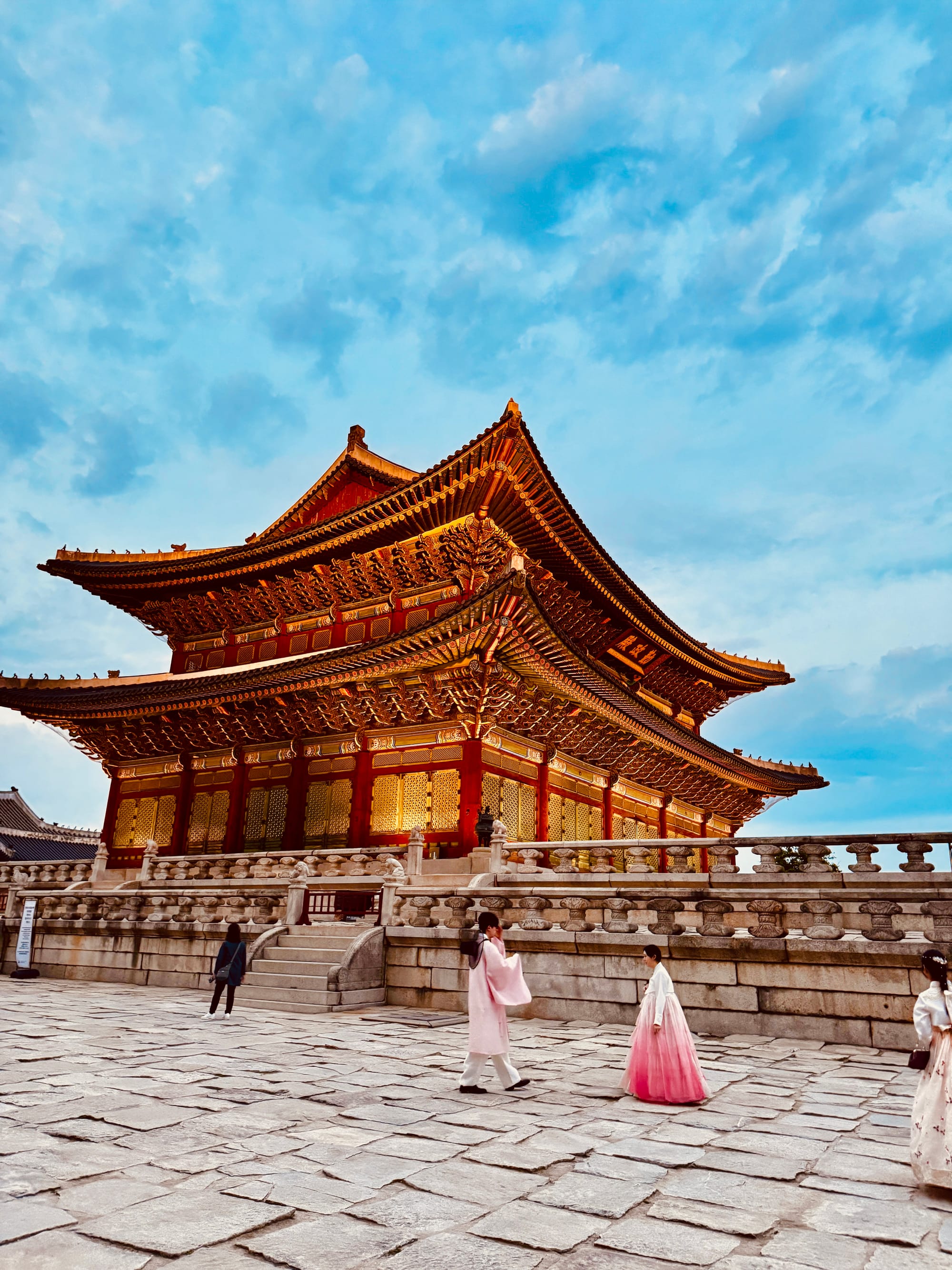
During the night opening, the palace becomes especially dramatic. Lighting does more than simply brighten the architecture. It stages the past. It emphasizes the lines of the eaves, softly brings out the colors of the dancheong⎯the traditional painted decoration on Korean wooden architecture, and makes the outlines of stone walls and palace halls more distinct in the dark. At Gyeongbokgung at night, we are not seeing the past itself. We are seeing the past illuminated in the way the present wants to see it.
But that does not mean we can simply call it fake. All memory is staged to some degree. Preserving the past in a city is not merely a matter of leaving old buildings in place. It is also a matter of how to present them, at what hours to open them, what kind of light to cast upon them, what paths to create, and what gestures people are invited to make there. Gyeongbokgung at night is not so much the preserved past as the past reassembled through the sensibility of the present.
One of the most striking sights there is the people dressed in hanbok.
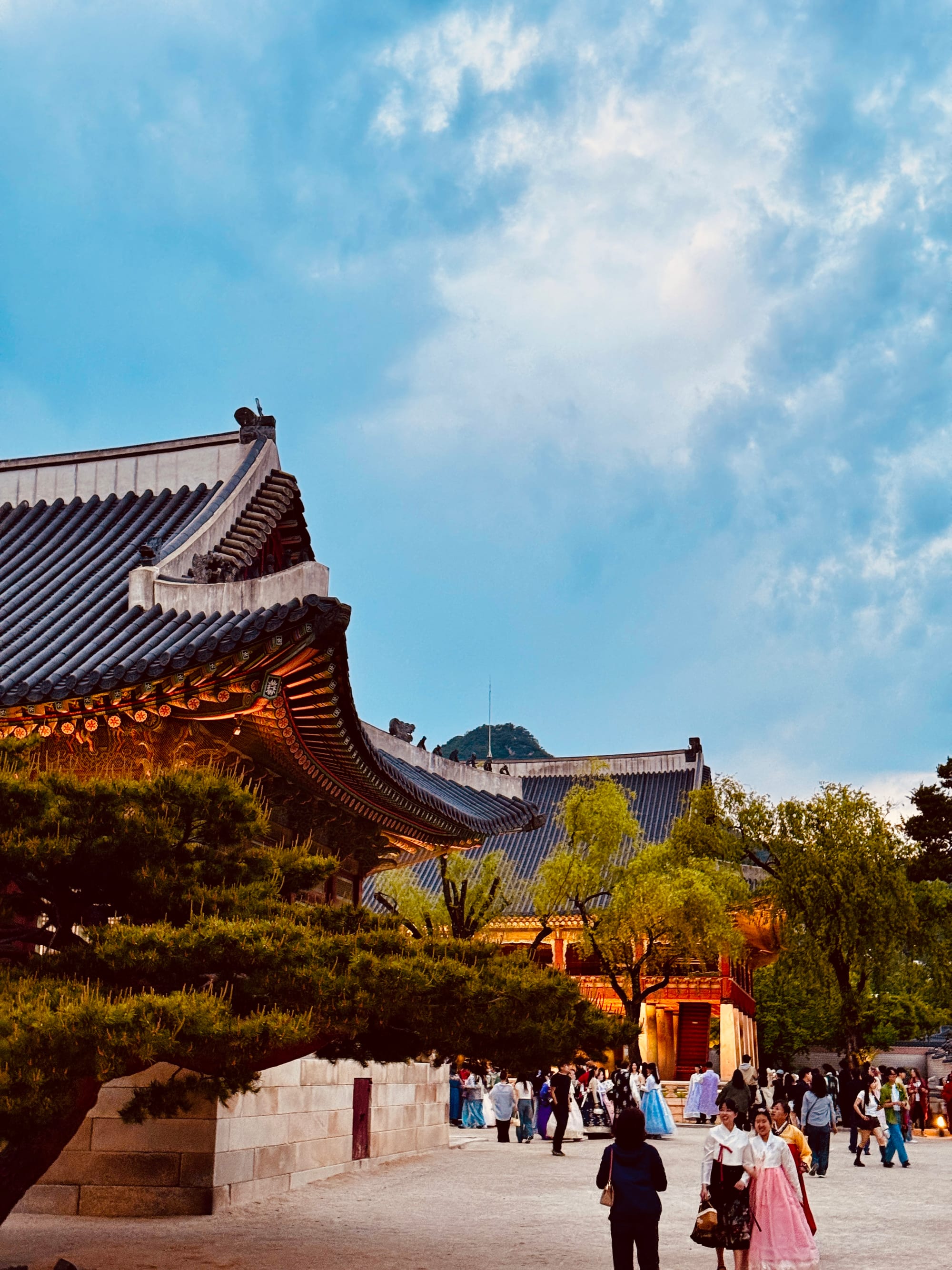
People walking through Gyeongbokgung in hanbok are no longer an unfamiliar scene. Some are Korean, others foreign. Some come with friends, some as couples, some as families. They walk along the palace’s stone paths, take photographs in front of the halls, and check their images on smartphone screens. The scene feels less like a solemn restoration of tradition and more like an experience of briefly wearing tradition on the body of the present.
There are many possible ways to view the culture of hanbok rental. Some may see it as the commercialization of tradition. The palace and hanbok become tourist products; a historical space becomes a backdrop for photography; traditional clothing is consumed as a temporary costume for experience. There is certainly truth in this view. The hanbok rental shops around Gyeongbokgung, the tourist routes, and the culture of social media photography all show how tradition has entered the grammar of today’s market and platforms.
But it is also difficult to dismiss this simply as shallow consumption. Culture does not survive through solemnity alone. If tradition remains only behind the glass of a museum display, it may be preserved, but it is difficult for it to be felt again in everyday life. Wearing hanbok and walking through the palace may not be a perfect historical reenactment, but it is at least one way for people to let tradition pass once through their bodies, photographs, and memories.
Sometimes tradition becomes close again by becoming lighter in this way.
Of course, this closeness has its risks. When tradition remains only a backdrop for photographs, we may forget its historical weight. The palace is a beautiful place, but it is not only a beautiful place. It is a complex space where power and ritual, damage and restoration during the colonial period, national identity, and the tourism industry overlap. To consume Gyeongbokgung is not simply to enjoy a beautiful night view. It is also to face the way Korean society wants to present its own past.
Seoul often illuminates the past selectively. Some pasts are preserved, while others disappear. Palaces are restored and lit, but old alleys and markets disappear through redevelopment. Royal architecture is preserved as a national symbol, while the ordinary living spaces of ordinary people are easily pushed aside in front of the city’s future value. This city says it loves the past, but it does not love every past in the same way.
This matters.
Walking through Gyeongbokgung at night, one can see two ways in which Seoul handles memory. One is illumination: the way the city beautifully lights the past and allows citizens and tourists to experience it. The other is deletion: elsewhere in the same city, the past is quietly pushed out, demolished, left only as a name or in photographs. Seoul’s memory exists both inside the glowing palace and in the traces of neighborhoods that have vanished.
For this reason, a night visit to Gyeongbokgung can become more than a tourist experience. It is a scene that shows Seoul’s relationship with the past. Seoul preserves, restores, illuminates, commodifies, and turns the past into experience. At the same time, Seoul quickly erases other pasts, writes over them, and redevelops them. This contradiction forms the memory of the city.
I do not want simply to condemn this contradiction. Rather, I want to read today’s urban culture within it. People walking through Gyeongbokgung at night do not come only to understand the past perfectly. They come to see a beautiful landscape, to take photographs, to try on hanbok, and to experience Seoul’s night a little differently. These motives cannot all be dismissed as light. Sometimes a light experience becomes the first form of interest in a culture.
The question is what comes next. After taking the photograph, what will we remember? Will we remember only the beautiful eaves under the lights? Or will we also think about the time this place has passed through, the processes of damage and restoration it has undergone, and the meaning with which this palace is being rewritten today in the middle of Seoul?
Gyeongbokgung at night makes the past present tense. When darkness falls and the lights come on, the palace is no longer a relic from a textbook. It becomes a walking path in the city, a backdrop for photographs, a date course, a memory for tourists, and a space that feels both familiar and unfamiliar even to Seoulites. In this way, the past enters today’s urban life again.
The scene is beautiful.
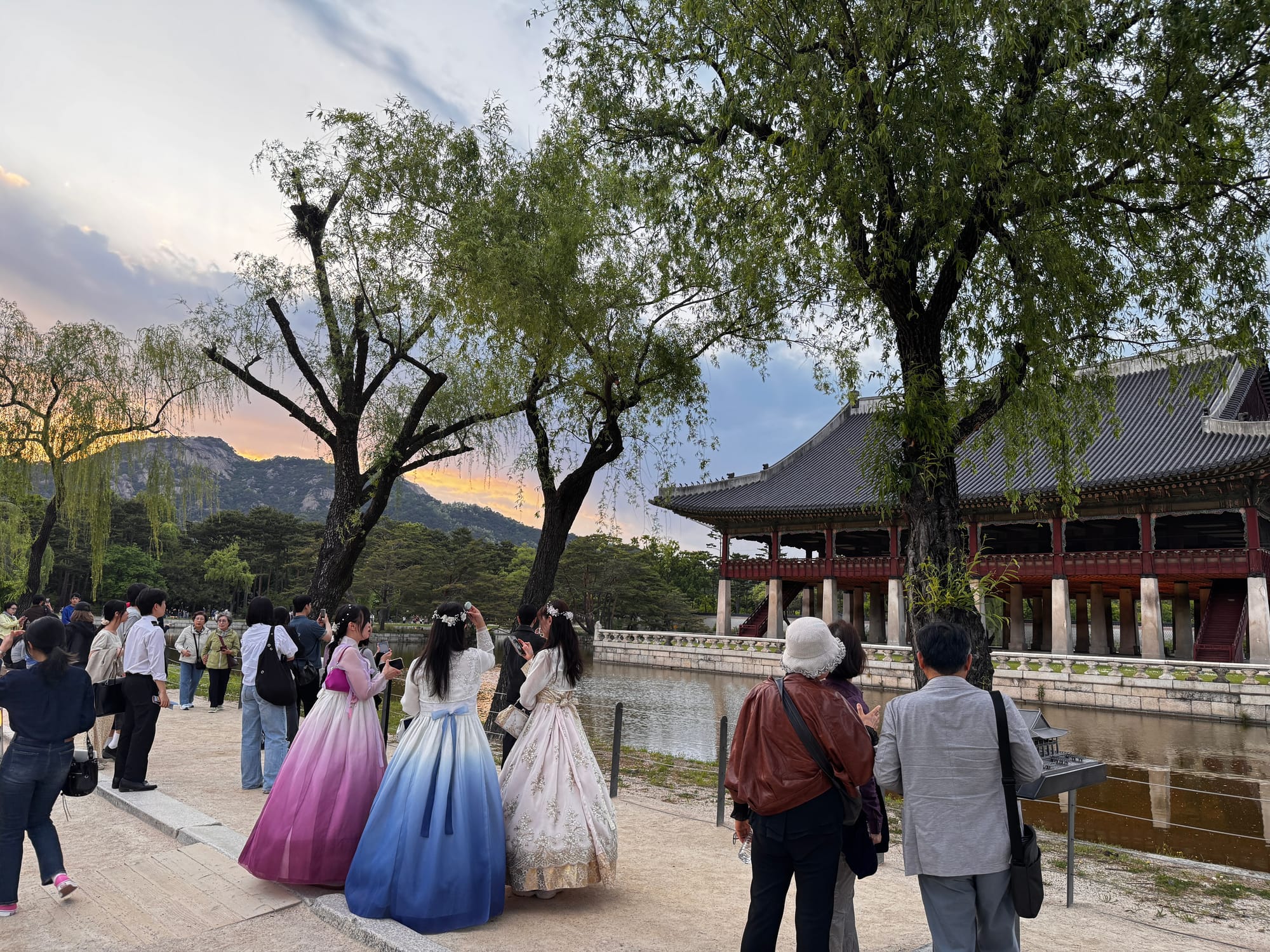
Seoul is a city that constantly runs toward the future. Yet in the middle of that fast-moving city, there are still palaces, stone paths, eaves, and the reflection of palace halls on water. People wear hanbok there, take photographs, walk, laugh, and briefly enter another time.
It is neither a perfect restoration of tradition nor mere tourist consumption.
Somewhere between the two lies the way Seoul meets its past today.
Gyeongbokgung at night tells us this:
the past has not disappeared, but always reappears in the way the present casts light upon it.
And sometimes, the way a city understands itself can be seen in the kind of light it chooses to shine on its past.